

What Supporting Neurodivergent Brains Actually Looks Like
Posted by Katie Zelinski, MS, OTR/L on 29th Apr 2026
As an Occupational Therapist, I often get the question "What are the best ways to support regulation for my Autistic, ADHD, or [insert neurodivergence here] child?" And I have to be honest. My reply is always "it depends." There is no one right way to support every single child. While there are some universal strategies that generally help, every child has a different brain, a different body, and a different sensory system. Just like the name suggests, there are many differences within a difference, and we want to honor and respect them all.
While there is no one-size-fits-all approach, there are ways to begin. Let's talk about some strategies that can help guide your support, while still honoring the child in front of you.
.
Safety and Attunement
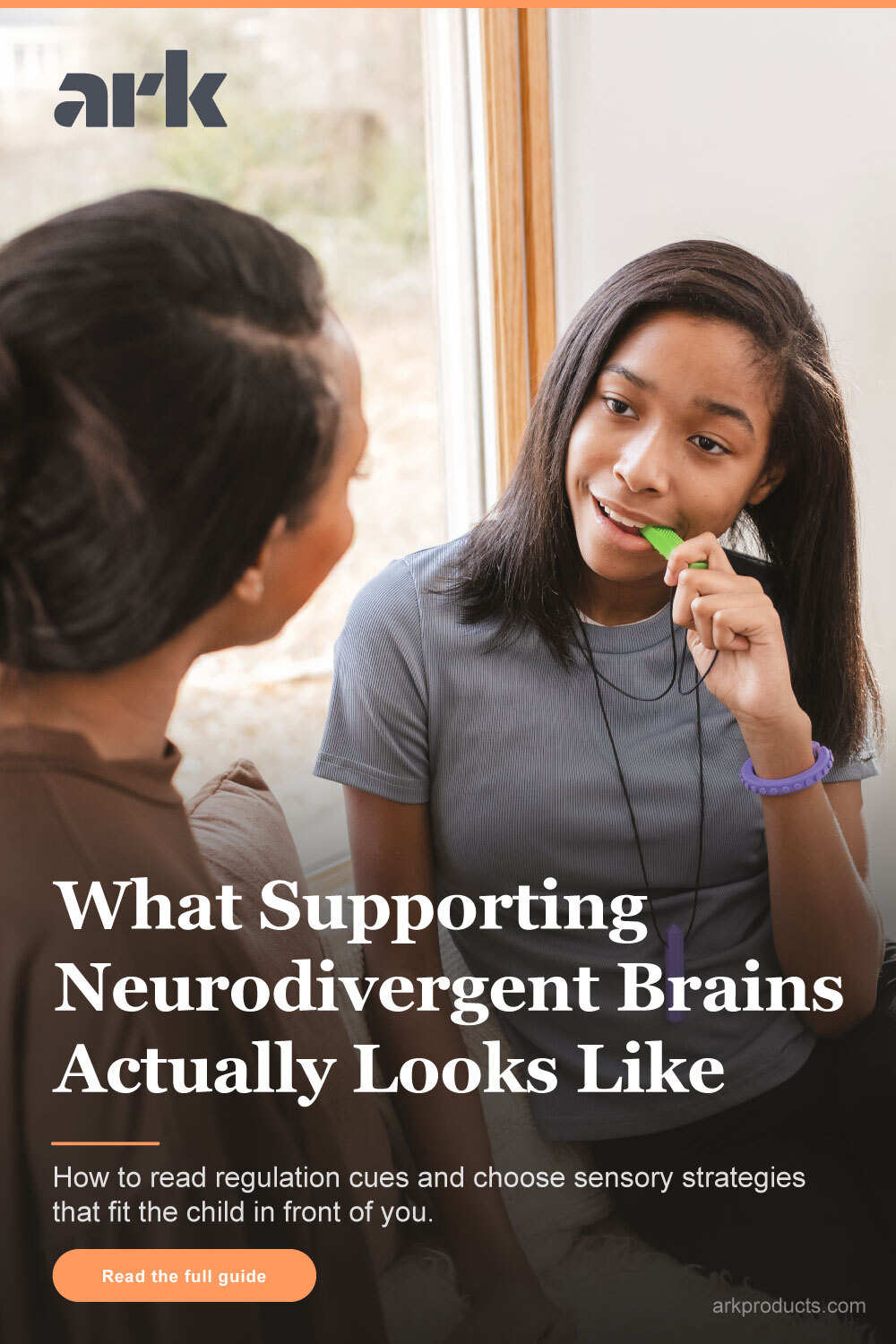
And I don't mean just keeping them safe from danger, but helping them feel safe in their body and environment. This first requires us to be attuned, meaning we are paying attention to their facial expressions, body language, and energy level, then responding to it. We can read their cues and support them with co-regulation based on our observations. This may include adapting the environment ("wow, those lights are bright, let's turn them down"), offering a tool ("this chew necklace might help you feel better"), or just being the regulated adult in the space that can be their anchor when the dysregulation is present. This process creates safety, but also helps us be better observers to identify what is working best for the child.
What do our observations mean?
If we notice the child is really sluggish or doesn't notice anything or anyone in their space (in an unaware way, not an afraid way), it likely means they need to up-regulate. Their nervous system needs more input for it to feel its best and engage with the world around them.
If we notice a child is VERY active: they are always looking for something to climb, jump on, or hang upside down from, but they seem disorganized while doing it, and YOU feel exhausted trying to keep up, they also likely need to up-regulate. Their nervous systems also need more input, but at a much greater intensity for them to feel organized. This is often where I see people make a mistake. They see these kids and want to calm them down, but that's the opposite of what they need.
If we notice a child running away (from you or the sensory environment), hiding, or even getting aggressive, they likely need to down-regulate. Their nervous system is overworked and overwhelmed, and they need less input to feel safe.
Strategies for Up-Regulating
Movement. To up-regulate, movement such as bouncing, jumping, going upside down, swinging in a circle, or spinning is going to be best. It's unpredictable and changes their head's position in space, which activates their vestibular system. Start with the less intense bouncing and jumping, then observe. If they need more, trial inversion and swinging as this is going to provide the most alerting input.
Vibration to the body. Vibration is such a powerful tool to up-regulate. Simply take the Z-Vibe (you don't even need an attachment, but if you want one, I suggest the Preefer Tip), and move it up and down the child's arms, hands, legs, and feet. I recommend long strokes at a slow to medium speed. If they like that, you could try their back, but always remember to observe their reactions — the attunement doesn't stop here. Read more about the power of vibration here.
Chewing textures. You may notice a child seeking out things to chew. I recommend using a chew tool with more texture for these kids. The Brick Stick, RoboChew, or the Textured Grabber sensory chews are all great options that will provide greater input to the mouth and tongue.
Vibration to the mouth. If a basic chew tool isn't enough input to up-regulate them, let's add vibration. Pair the Z-Vibe with the Brick Tip or Bite-n-Chew Tips. This combines intense tactile and proprioceptive input (deep pressure through chewing). Note: supervision is required at all times with the Z-Vibe.
Try something cold. Intense cold temperatures are a shock to the nervous system, which can be both up-regulating and down-regulating. Put one of the chew tools in the freezer or make an ice-pop (it can be as simple as just frozen water).
Strategies for Down-Regulating
Movement. To down-regulate, movement should be slow and predictable. Rocking and linear swinging (like on a playground swing) are perfect choices to help a nervous system feel safe.
Chewing textures (or lack thereof). Kids who need to down-regulate can still benefit from chewing, as it provides deep pressure to their jaw, but we want to offer them less textured items to chew. To help support a reactive nervous system, options like the ARK Bite Tube Hollow Chew Tool or the Krypto-Bite® Chewable Gem Necklace would be ideal options. They are smooth and stick-like, so it's easy to reach the back molars for deep chewing.
Resistance. Tools that offer more resistance can support down-regulation. They stimulate the proprioceptive system and create more work for the body. The ARK Buddy Bite Chewable Stick Figure offers an oral tool, but it also offers resistance each time the child squeezes the figure's leg together. I recommend the XXT (extra, extra tough)!
Visual input. Visual input that is predictable can be very organizing and down-regulating. The ARK Wingamajigs® Spinning Pencil Topper Fidget is a great option. It provides the predictable visual input of the wings spinning, but can also be used as a fidget tool for the hand. The dragonfly has two wings that can be pushed together or apart, offering more resistance to the body.
As you begin to implement some of these strategies, remember that each child is unique. We always want to pay attention to how the child responds to the tool and if it's truly supporting the child's nervous system. Supporting neurodivergent children requires us to stay curious, be flexible, and let the child's response guide you.
If you are looking to learn more about how we can support our neurodivergent kids, I'm hosting a free virtual summit called Supporting Neurodivergent Brains May 4–6 for OTs, SLPs, and professionals who want to learn more neuroaffirming approaches and treatment strategies to support sensory processing, regulation, and executive function. I've gathered 30 of the most intelligent, passionate, and empowering experts in the field to share their knowledge, experience, and tips on how we can better support our neurodivergent kids. While this was created for professionals, parents are welcome too. You can find more information and get your free ticket here.
About the Author — Katie is a pediatric Occupational Therapist with over 12 years experience working with neurodivergent kids and their families. She holds a certificate in Ayres SI and specializes in sensory processing and regulation. After realizing that most therapists don't have the mentorship and support she received early on, she founded The Well-Balanced OT in 2021. It's an online platform where she supports therapists in building confidence and clarity in their practice through a neuroaffirming, sensory-informed, and child-led approach. Follow Katie on Instagram @the.well.balanced.ot or visit thewellbalancedot.com.
Related Reading:
- 10 Tips for Kids Who Need to Chew — An Oral Sensory Diet
- Why Does My Older Child Chew on Everything?