
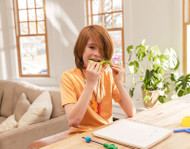
Why You Can't 'Just Stop' Biting Your Nails
21st Apr 2026
You've already tried everything. Bitter-tasting nail polish. Sitting on your hands. Activities to keep your hands busy. Sheer willpower and a running internal monologue of stop, stop, stop.
If you're reading this (whether for yourself or for your child) you've probably tried some combination of the above and it hasn't stuck. Maybe it worked for a few days. Maybe it works until the bitter polish wears off. Maybe your child stopped for a week and then quietly started chewing on their cuticles instead.
There's a reason none of that worked, and it's not a lack of discipline or willpower. It's because every one of the above strategies tries to block the behavior without addressing what's driving it. And for most people who bite their nails, something very real is driving it.
.
What Nail Biting Actually Is
Nail biting is an oral sensory behavior. That might sound technical, but it's actually pretty simple: the act of biting sends deep-pressure input through the jaw, and the nervous system finds that input calming and organizing. (If you've read our posts on why some kids and adults chew on everything or shirt chewing, the underlying mechanism is the same — proprioceptive input to the jaw.)
But nail biting has some characteristics that make it different from other chewing behaviors, and those differences matter when it comes to figuring out what helps.
What Makes Nail Biting Different
It's often completely unconscious. A child who chews on their shirt knows they're doing it because a wet collar or sleeves is hard to ignore. But nail biting frequently operates below conscious awareness. Many people don't realize they're biting until they look down and see the damage. The hand drifts up to the mouth on autopilot, especially during moments of concentration or zoning out. This is part of what makes it so hard to "just stop". You can't stop something when you're not even consciously aware that it's happening.
The tool is always attached to you. Shirts can be swapped out. Pencils can be put away. But your fingers are always available, in every setting, with zero barriers. This is part of why nail biting tends to be so persistent. There's literally never a situation where your fingernails aren't right there at your disposal. A boring meeting, a long drive, a dark movie theater, lying in bed at night. No other chewing behavior has that level of access.
It has strong ties to ADHD and anxiety. Nail biting is one of what clinicians call body-focused repetitive behaviors, or BFRBs: a category that also includes skin picking, hair pulling, and cheek biting. BFRBs are significantly more common in individuals with ADHD and anxiety disorders. The connection makes sense: ADHD brains are often under-stimulated and reach for repetitive motor activity to regulate attention; anxious brains reach for repetitive motor activity to self-soothe. Nail biting serves both functions simultaneously, which is partly why it can be so deeply entrenched.
Physical triggers reinforce the loop. Hangnails, rough edges, a slightly uneven nail. These small imperfections then become their own triggers. The brain registers the irregularity, and biting starts before any conscious decision is made. Then the biting creates new rough edges, which become new triggers, and the system repeats itself. This self-reinforcing cycle is one of the reasons nail biting is harder to redirect than some other chewing behaviors, and it's also where some of the most practical solutions come in.
It persists into adulthood more than almost any other oral behavior. Shirt chewing tends to decrease as kids get older. Pencil chewing often fades after school. But nail biting frequently carries on for decades. We hear from adults in their 20s, 30s, 40s, and beyond who have been biting since childhood and never found anything that helped. In many cases, no one ever explained to them why they were doing it or truly found the right solutions.
What Actually Helps
The strategies that work best for nail biting are the ones that address the specific patterns above — the unconsciousness, the constant access, the physical triggers, and the underlying sensory need. Here's what we recommend, roughly in the order we'd try them:
Break the physical trigger cycle. Keep nails trimmed short and filed smooth. It's simple, but it eliminates the rough edges and hangnails that cue the biting reflex. For some people, a weekly "nail maintenance" routine (even just five minutes with clippers, a file, and moisturizer) makes a noticeable difference within a couple of weeks.
Build awareness of the behavior. Because nail biting is often unconscious, the first step is simply noticing it more often. It's about catching the hand-to-mouth motion earlier so you have a chance to redirect. Some families use a gentle, agreed-upon signal (a light tap on the arm, a specific word) rather than saying "stop biting your nails" every time. The goal is awareness without shame.
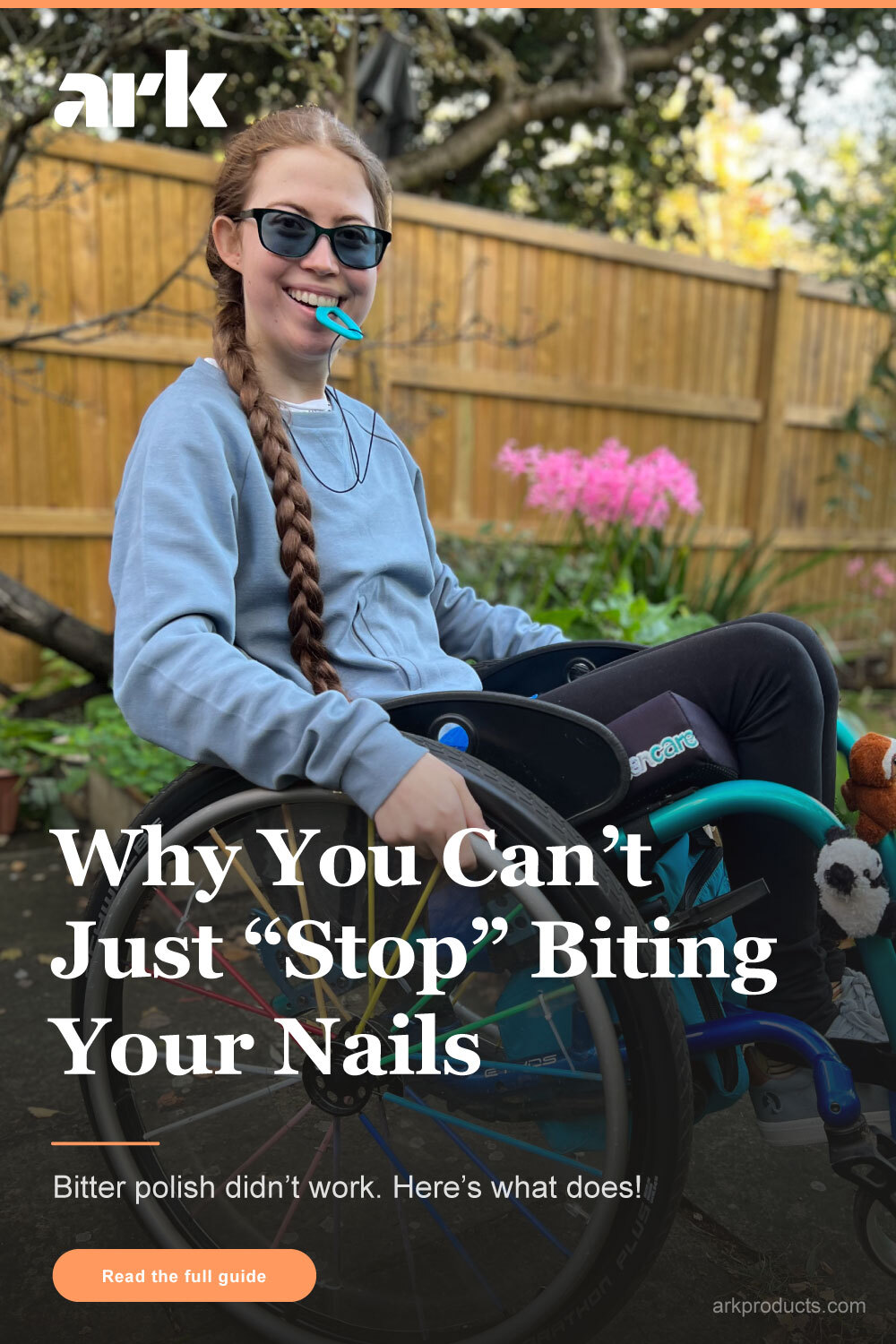
Give the mouth a better option. Once someone is more aware of the behavior, the next step is having something else to reach for. This is where a purpose-built oral sensory tool makes a real difference. It meets the same proprioceptive need that the nails were meeting, but safely and without the damage.
For nail biting specifically, wearable options tend to work best because they solve the "always available" problem:
- Chewable necklaces keep an alternative right at your chest — close enough to compete with the fingers. Our thinnest designs (like the Loop Necklace, ParaBite, or our Nail Biting Chew Pack for a bundle savings) are popular for nail biters because they're closer in profile to a fingernail than bulkier options. But shape is really about preference.
- Chewable bracelets work the same way, and are a great option if you'd prefer to not wear a necklace.
- Pencil topper chews are great for school or desk work, where nail biting tends to spike during concentration. We'd recommend the more slender Bite-n-Chew style.
On toughness: our chew tools come in three firmness levels (Soft, XT, and XXT). For nail biting, the soft/standard level is usually the best match. Fingernails are thin and easy to bite through, so even our softest option will be much more durable. The tougher levels are designed for much heavier chewers — people who chew through shirts or pencils regularly.
Not sure where to start? Our Chew Quiz can help you narrow it down.
Meet the broader sensory need, not just the oral one. Nail biting is often one piece of a bigger regulatory picture. If the body is generally under-stimulated or overwhelmed, addressing that larger need can reduce how much the mouth has to do. Physical activity like swimming, climbing, jumping, carrying heavy things, pushing against walls, etc. all provide the kind of deep-pressure input that helps regulate the whole system. When the body's overall sensory needs are being met more consistently, the intensity of the nail biting often decreases. An occupational therapist can help put together a structured plan (called a sensory diet) tailored to a specific person's needs.
Be patient, especially with long-standing patterns. If someone has been biting their nails for years, the behavior is deeply automatic. It won't switch off overnight. Every time they notice the urge and reach for a chew tool instead is progress, even if they still end up biting sometimes. For parents: consistency across environments (home, school, grandparents' house) helps enormously, and so does framing the chew tool as a positive alternative rather than a punishment.
A Note for Adults
We hear from adults every week who have been biting their nails for 10, 20, 30+ years and assumed it was a willpower problem. It's not.
What usually helps is the same combination: understanding the need behind it, removing physical triggers (nail care), building awareness, and having a better outlet available. Many of our chewelry options for teens and adults are designed to be discreet with neutral colors, simple shapes, designs that pass as regular jewelry in a meeting or a classroom.
When to Talk to a Professional
Most nail biting responds well to the strategies above. But if it's causing repeated infections or significant skin damage, if it's accompanied by other body-focused repetitive behaviors (skin picking, hair pulling, cheek biting), or if it seems tightly linked to anxiety that's affecting daily life — it's worth reaching out.
An occupational therapist can assess sensory needs and build a regulation plan. A psychologist who specializes in BFRBs can offer techniques like habit reversal training, which is specifically designed for behaviors like nail biting.
The bottom line: your nails aren't the problem. They're just the thing that was most available when your nervous system needed help. Give it something better to work with, and you may be surprised how quickly things shift.
About ARK — Founded by a speech-language pathologist and an engineer, ARK has spent over 25 years designing tools and resources for oral motor therapy, feeding, and sensory needs. All ARK products are made in the USA from food and medical-grade materials. If you have a question, reach out to us anytime at support@arkproducts.com.
Related Reading:
- Why Does My Older Child Chew on Everything?
- 10 Tips for Kids Who Need to Chew — An Oral Sensory Diet
- Alternatives for Nail Biting (Product Guide)
Ready to find the right tool? Take our Chew Quiz →
.