

Why Kids and Adults Chew on Pencils and Pens
13th May 2026
Does bite marks on pens and pencils sound familiar? Pens and pencils are among the most common items people chew on. Chewing can help increase focus and attention, so it makes sense that a pen or pencil would be a go-to outlet. Whether you're eight years old working through a spelling test or thirty-four years old working through a big project - a writing tool is right there as you're thinking.
Why does chewing help increase focus/attention? And what can you do to help? Read on below.
.
What the body is actually doing
Chewing delivers what's called proprioceptive input to the jaw. Proprioception is the nervous system's sense of pressure, resistance, and position in the body. It's grounding, regulating, and for a lot of people, engaging it through repetitive jaw movement is something the body reaches for automatically during mentally demanding situations.
This is why gum chewing is so common in high-stress environments. Why people bite their lips before a big presentation. Why some adults can't get through a long meeting without biting their pen. The jaw is a reliable source of sensory input, and the nervous system learns early that using it helps with focus, stress, and staying regulated.
For kids and adults with higher oral sensory needs, that pull is stronger. They're not chewing out of boredom or defiance. Their nervous systems are actively seeking input, and the pencil is simply the most convenient source available at the moment they need it most.
When does it tend to happen?
Pay attention to the pattern and you'll usually see it cluster around specific moments:
During tasks that require sustained attention. Tests, writing assignments, reading comprehension, long stretches of desk work. These are exactly the situations where the brain is working hard and looking for something to keep it anchored. The repetitive motion of chewing helps the brain stay online; it's similar to bouncing a leg or tapping a finger, but through the mouth.
During transitions or waiting. Before class starts, between activities, during a long car ride with nothing to do. Low-stimulation stretches that leave the nervous system looking for input.
When stress or anxiety is elevated. Stress is one of the most consistent triggers for oral sensory seeking, and pencil chewing often intensifies in proportion to how much pressure someone is feeling. A difficult assignment, a test, or a classroom that's loud or unpredictable can all be triggers for chewing.
In kids with ADHD or sensory processing differences. Chewing during tasks that require focus is especially common here. Repetitive oral input can help the ADHD brain stay engaged and regulated during sustained attention demands.
Noticing when the chewing happens is often more useful than focusing on the fact that it's happening. The timing can help tell you what the body is asking for.
The most logical fix: make the pencil itself the safe thing
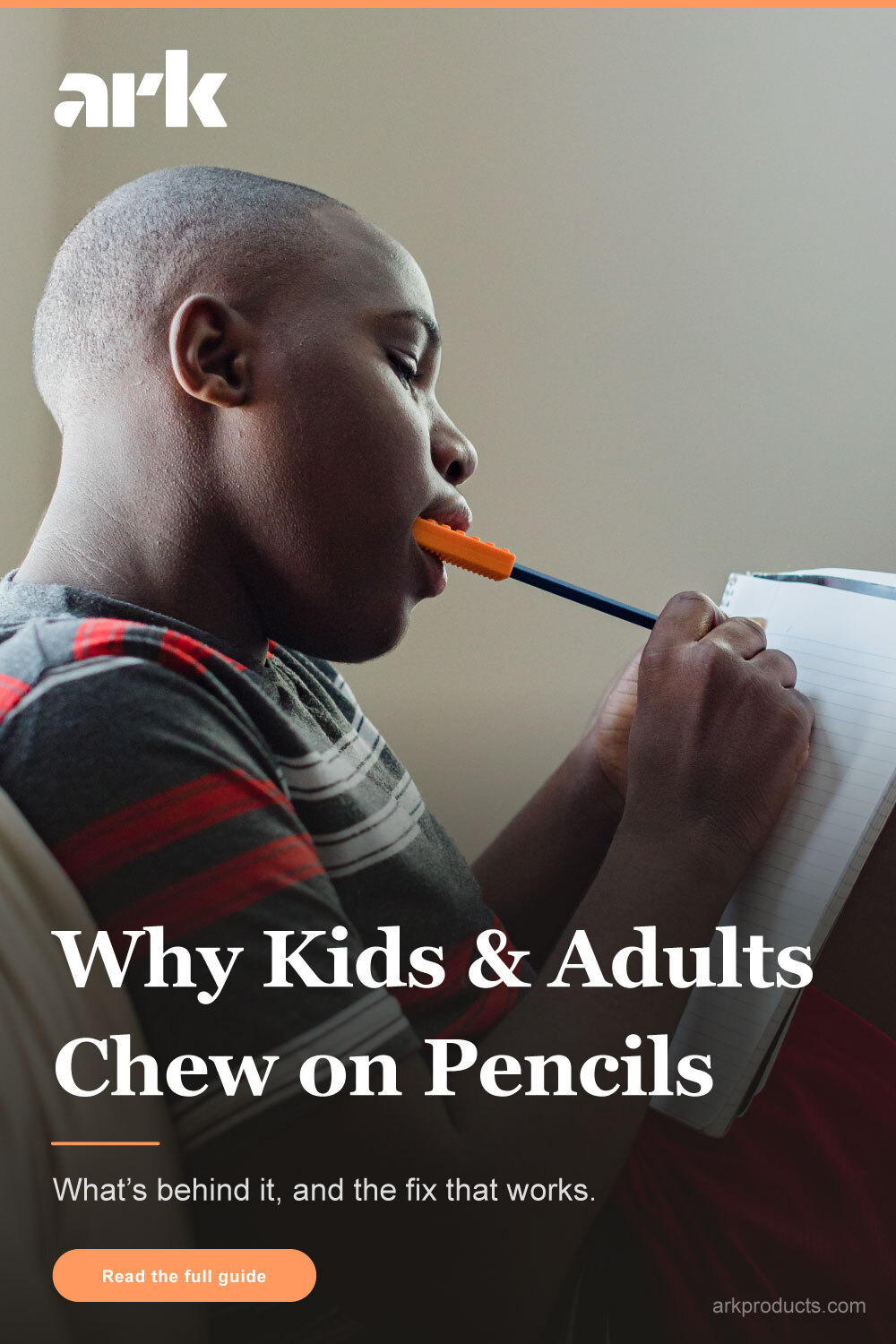
Since the pencil is already in hand, the most practical solution isn't to replace the pencil with a separate chew tool. It's to make the pencil chewable. That's exactly what pencil topper chews are designed to do. They slide onto a standard #2 pencil and give the chewer a safe, durable surface right where they're already going.
For people who chew heavily and go through materials fast, toughness level matters. ARK chew tools come in three options: Soft for lighter chewing, XT Medium for moderate, and XXT Toughest for the most intense chewers. If pencils are getting destroyed quickly, start at XT or XXT for extra durability.
For chewing that happens beyond the desk
Pencil toppers solve the during-work problem well. But if the chewing also happens between tasks, during transitions, at home, or in situations where there's no pencil in hand, it helps to have something accessible in other ways too.
- Chewelry lives around the neck and is always available, without requiring anyone to reach for a separate tool. The discreet designs work in classrooms and offices alike. For pencil chewing, a long slender shape like the Krypto-Bite Gem or Bite Saber are great options.
- Handheld chews like the Grabber and Y-Chew are a bit larger and great for folks who would prefer not to use a necklace, or like a chew with more surface area to explore. These reach the back molars, where chewing delivers the most proprioceptive input.
The goal with any of these tools is the same: give the mouth something safe to do with the input it's already seeking, so the chewing works for the person instead of against them.
Other things that help
Crunchy and chewy foods. Adding more resistant foods to snack and meal routines (carrots, apples, pretzels, jerky, dried fruit) gives the jaw regular input throughout the day. Some people find this reduces the urge to chew on non-food objects between meals. A snack before a focused work session can help.
Physical activity and heavy work. Oral sensory needs often travel with sensory needs elsewhere in the body. Activities that provide resistance and proprioceptive input through the whole body (swimming, climbing, carrying things, pushing or pulling) can help regulate the sensory system overall and may reduce the intensity of oral seeking. An occupational therapist can help put together a full sensory diet that addresses the bigger picture.
Getting teachers on board. When pencil chewing is happening at school, the most effective transitions to safe tools happen when everyone is redirecting consistently. Most teachers are receptive once they understand the sensory reason behind it. A pencil topper or a chew tool kept in the pencil case is easy to explain and easy to manage in a classroom.
Worth looking at more closely if...
Pencil chewing on its own is common and, with the right outlet, very manageable. If you're also seeing difficulty staying seated, sensory sensitivities, trouble with transitions, or significant challenges with focus and attention, it may be worth connecting with an occupational therapist.
And if you're an adult reading this: this is more common than most people realize, it doesn't disappear for everyone after childhood, and the same tools and strategies apply. The discreet options designed for teens and adults are specifically built for settings where you want something subtle.
About ARK Products — Founded by a speech-language pathologist and an engineer, ARK has spent over 25 years designing tools and resources for oral motor therapy, feeding, and sensory needs. All ARK products are made in the USA from food and medical-grade materials. Questions? Reach out anytime at support@arkproducts.com.
Related Reading:
- Why Does My Older Child Chew on Everything?
- 10 Tips for Kids Who Need to Chew — An Oral Sensory Diet
- Why You Can’t Just “Stop” Biting Your Nails
Ready to find the right tool? Take our Chew Quiz →
.