
Finger, Knuckle, and Hand Chewing: How to Help
19th May 2026
Hand and finger chewing are one of the most common things we get questions about at ARK. Why? Because our hands and fingers literally go with us everywhere! For kids and adults who chew on their fingers, knuckles, or the fleshy parts of their palms, that constant availability is exactly the point - the body itself becomes the chewing outlet.
In that sense, finger and hand chewing is the most stripped-down version of oral sensory seeking there is. No object required, no reaching for something. Just the hand, which is always within range and always available the moment the nervous system asks for input.
It can also be one of the more alarming-looking behaviors for parents to witness, especially when it escalates. There's a big difference between a child who occasionally mouths a finger during a movie and a child who is biting down on knuckles hard enough to break the skin. Understanding where on that range a person falls, and why, matters a lot for figuring out what to do about it.
.
Why the hand, specifically
Chewing on the hand delivers proprioceptive input to the jaw, which is the same deep, rhythmic feedback the nervous system gets from chewing on anything. For people with sensory processing needs, that input is regulating. It helps the brain organize and calm itself, especially during stressful or overstimulating situations.
The hand also offers variety in density. The soft pad of a fingertip is different from the resistance of a knuckle, which is different again from a pinch of skin. The body instinctively finds the spot that delivers the right amount of input for what it needs in that moment. That's not random. It's the sensory system doing exactly what it's designed to do.
There's also a comfort dimension here that's worth acknowledging. For very young children especially, bringing the hand to the mouth is one of the earliest self-soothing behaviors there is. It predates birth. When that pattern persists or resurfaces under stress in older children or adults, it's often the nervous system falling back on a regulation strategy it learned very early.
What tends to drive it
The reasons behind finger and hand chewing overlap with other oral sensory behaviors, but a few things come up consistently and are worth naming specifically.
- Sensory seeking and oral hyposensitivity. Some individuals simply have a higher-than-typical need for oral input. They may have what's sometimes called oral hyposensitivity, meaning limited or reduced sensation in the mouth. Chewing harder, on firmer surfaces, with more pressure is one way the nervous system tries to get enough feedback. Knuckle chewing in particular often signals a significant need for deep oral input, and is commonly seen in kids with autism, sensory processing disorder, or other sensory differences.
- Anxiety and stress. The hand goes to the mouth when things feel hard. This is true at every age. Just do a google image search of the word "anxiety" to see how common it is - you'll see a whole range of images with people who have their hands in their mouths. For children, that might look like chewing fingers during transitions, unfamiliar social situations, or moments of frustration. For adults, it can show up during tense conversations, difficult work, or periods of general anxiety. Chewing is a tool that the body uses to manage stress/anxiety. It's self-regulation.
- Stimming and repetitive behavior. For individuals with autism or ADHD, finger and hand chewing can be a form of stimming, meaning self-stimulatory behavior that helps regulate the sensory system and manage overwhelm. Stimming behaviors are not something to eliminate; they serve a real function! The goal is to redirect to a safer outlet, not to stop the regulation strategy entirely.
- Habit and automatic behavior. Some people chew their fingers without any awareness that they're doing it. It has become so automatic that it happens during TV, during conversation, during anything that occupies the mind without occupying the hands. This is especially common in people who have been doing it since early childhood. At that point it's less a sensory crisis and more a deeply ingrained pattern, which requires a slightly different approach: consistent redirection to a replacement, over time, until the new habit takes hold.
- Body-focused repetitive behavior (BFRB). In some cases, particularly when the chewing is intense, causes physical damage, and persists despite the person wanting to stop, it may fall under the umbrella of body-focused repetitive behaviors. BFRBs like skin picking, hair pulling, and compulsive biting are related to anxiety and are not simply a matter of willpower or habit. If the behavior is causing real harm and the person feels unable to control it, connecting with a health professional alongside sensory strategies may be worth exploring.
From mild to intense: the range is important
Not all finger chewing looks the same, and it's helpful to think about where it sits before choosing an approach.
On one end: gentle, occasional mouthing of fingertips, usually during downtime or low-stimulation moments. This is very common in young children and often resolves on its own or responds quickly to redirection.
In the middle: regular, purposeful finger or knuckle chewing that happens across multiple contexts (at school, at home, during stress), may be leaving calluses or rough skin, and isn't stopping despite reminders. This is where most families and individuals are when they start looking for answers.
On the other end: aggressive chewing that causes bleeding, broken skin, or sores. This level of intensity often indicates a significant sensory need and may also overlap with BFRB territory. Professional support from an occupational therapist to create a sensory diet can be helpful here.
Wherever someone falls on that scale, the core strategy is the same: meet the oral sensory need with something safer, while also addressing the underlying drivers where possible.
What actually helps:
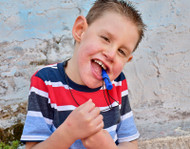
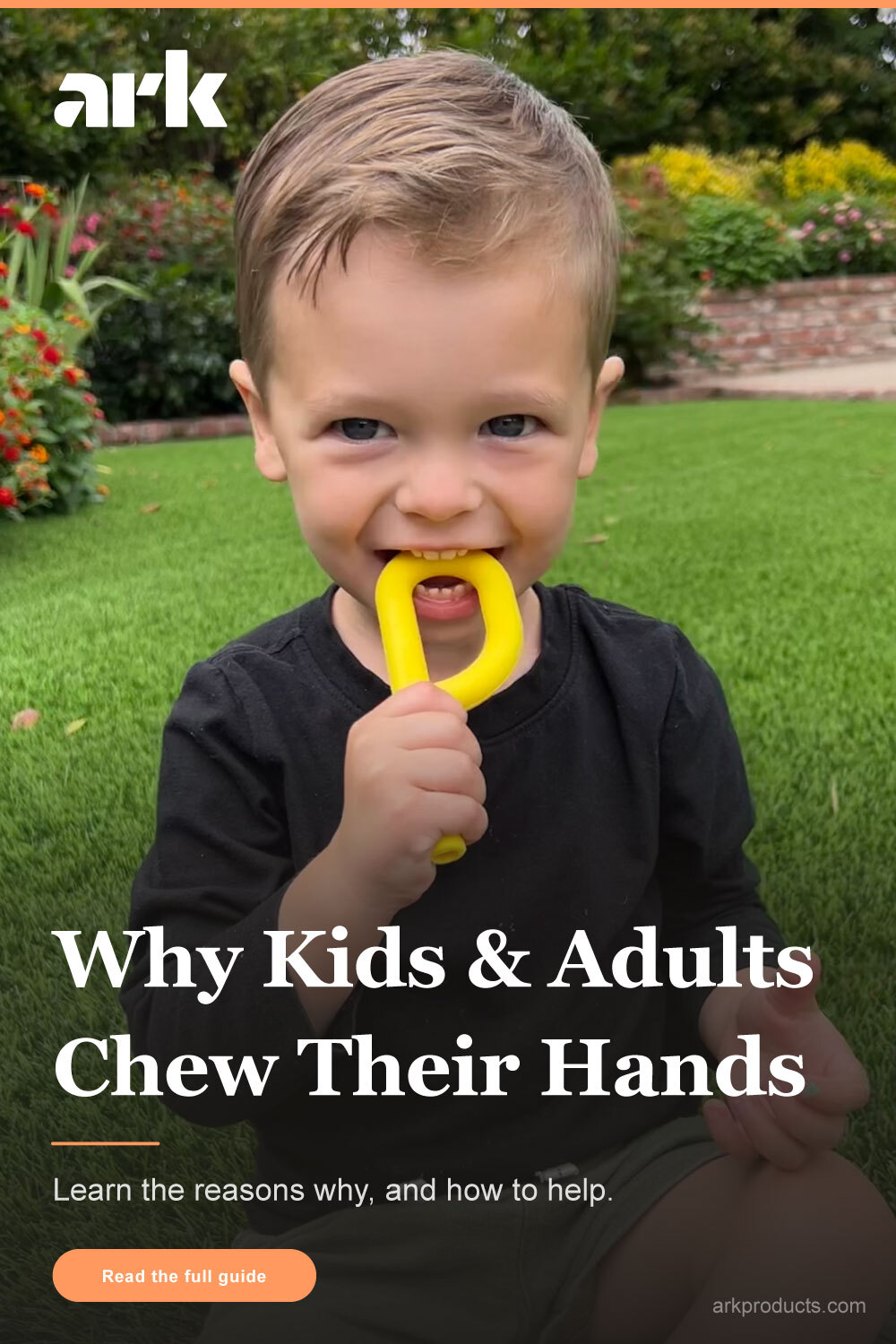
Give the mouth something better to chew on. This is always the starting point. The goal isn't to take chewing away; it's to redirect it to something safe. For finger and hand chewing specifically, long and slender chew tools tend to work best because they mimic the shape of the finger. The Grabber® and Y-Chew® are both designed with long extensions that reach the back molars, which is where chewing delivers the most proprioceptive input. They're also shaped to be held naturally in the hand, making the swap from fingers to tool a smaller transition than it might seem.
For people who prefer something around their neck rather than in their hand, chewelry keeps a safe chewing surface accessible at all times. Long, slender shapes like the Krypto-Bite Gem Necklace or Chewable Pen Necklace are great.
Our Finger Biting Chew Pack or Go-To Chew Pack all feature back molar shapes that are suitable for finger chewing.
Match the toughness level to the chewer. ARK chew tools come in three color-coded levels: Soft for lighter chewing, XT for moderate, and XXT for the most intense chewers. Starting at XT is reasonable for most finger chewers; if you've chewed through tougher objects before or do significant damage to the fingers/knuckles, XXT is often the right call. Not sure where to start? The Chew Quiz helps narrow it down.
Keep the replacement within reach. The reason the hand works as a chewing outlet is that it is always there. A chew tool that lives at the bottom of a backpack or in a different room doesn't compete well with something that's literally attached to the body. The tool needs to be easily accessible to the person. Around the neck, clipped to a belt loop, in a pocket, on the desk. Wherever the chewing tends to happen, the tool should be ready to redirect.
Address the sensory system more broadly. Oral sensory needs often come alongside sensory needs in other parts of the body. Regular heavy work activities (climbing, carrying, pushing, pulling, swimming) can help meet the body's overall proprioceptive needs and may reduce the intensity of oral seeking over time. An occupational therapist can put together a sensory diet tailored to the individual that addresses both the oral and the broader sensory picture.
Add crunchy and chewy foods strategically. Building more oral-motor-demanding foods into the daily routine (raw vegetables, apples, pretzels, chewy proteins, dried fruit) provides regular jaw input through meals and snacks.
Be consistent with redirection, not with stopping. Telling someone to take their hand out of their mouth without offering an alternative addresses the behavior but not the need. Every time a hand goes toward the mouth, that's an opportunity to hand them the chew tool instead. Done consistently, over enough time, the redirection becomes automatic. It takes patience, but it works.
For adults: you're not imagining it
Most of the conversation around finger and hand chewing centers on children, but adults do it too. Some have been doing it since childhood and never fully stopped. Others notice it appearing or reappearing during periods of high stress, during long work sessions, during anything that creates the conditions the nervous system responds to with oral seeking.
The same tools and strategies that work for kids work for adults, and the discreet options designed specifically for teens and adults are built with exactly that context in mind. While all ARK chews are used by both kids and adults, some older teens and adults prefer neutral, minimal designs made to look more similar to regular jewelry.
When to bring in a professional
If the chewing is mild and not causing harm, redirection to a safe tool and some sensory diet adjustments may be all that's needed. But if you're seeing broken skin, significant distress, a child who seems unable to stop even when they want to, or a pattern that's getting more intense rather than less, an occupational therapist is a good first call. They can assess whether the underlying sensory needs are being met, recommend specific strategies, and help make sense of the bigger picture.
About ARK Products — Founded by a speech-language pathologist and an engineer, ARK has spent over 25 years designing tools and resources for oral motor therapy, feeding, and sensory needs. All ARK products are made in the USA from food and medical-grade materials. Questions? Reach out anytime at support@arkproducts.com.
Related Reading:
- Why Does My Older Child Chew on Everything?
- 10 Tips for Kids Who Need to Chew — An Oral Sensory Diet
- Why You Can’t Just “Stop” Biting Your Nails
Ready to find the right tool? Take our Chew Quiz →
.