
20 Spooky Oral Motor Activities for Halloween
2nd Oct 2026
Halloween is a fun time of year, with tons of ways to make oral motor therapy more engaging with seasonal ideas. Here are 20 ways to add a spooky twist to practicing lip, tongue, jaw, and breath skills.
One thing before starting: food-based activities depend entirely on the individual. Allergies, the textures they tolerate, and their current chewing and swallowing skills all matter, so please keep those front of mind.
.
.
Ghosts, wind, and things that go boo
Blowing works on lip rounding, lip seal, and graded breath control, and it's easy to make this feel like a game instead of an exercise. If blowing is brand new, start with our post on how to teach blowing first.
1. Ghost races. Draw a face on a cotton ball or a small wad of tissue and race it across the table to a finish line by blowing it along. Move the finish line farther away to make it harder. This asks for directed, graded breath rather than one big puff.
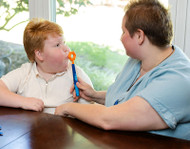
2. Blow out the jack-o'-lantern. Hold a Z-Vibe® upright like a candle with the vibration on, and switch it off the moment they blow so the flame "goes out." Relight it and repeat. It's not the same thing of course, but kids will go along with you even if they chuckle a little. And the vibration on/off will be a stand in feedback for the candle getting lit / going out. Bonus if you've got the Hex Tip in your toolbox - this one is a great pumpkin-esque stand-in!
3. Howl like the wind. Whistles, kazoos, harmonicas, and the paper roll-out party horns all need good breath control and lip seal to make a sound. Encourage kids to make the spookiest noise they can and hold it as long as they can for sustained control. There's more background on the benefits here in our post on why whistles support oral motor development and breath control.
4. Bubbling cauldron. Put a straw in a cup of water and have them blow bubbles into it, slow and steady, so the "potion" bubbles without splashing over.
5. Pumpkin cheeks. Puff both cheeks full of air, hold for a few seconds without letting any escape, then release. Then one cheek at a time, then alternating back and forth. Cheek work plus a genuine lip seal, and it makes a great jack-o'-lantern face.
Sticky, sour, and spooky: tongue work with Halloween candy
Anything sticky is useful because it gives the tongue a specific place to go (a tactile cue for awareness) and a reason to get there. There's more along these lines in our post on edible oral motor exercises.
6. Candy corn on "spot". Place a single candy corn (or a sprinkle, or a cheerio) on the tongue tip and ask the individual to press it against the alveolar ridge just behind the upper front teeth, holding it there. Work up toward 30 seconds. Depending on the food type, the Fine Tip on the Z-Vibe can help place it and cue the spot. This helps work on tongue tip elevation, which is what the tongue needs to do for speech sounds /t/, /d/, /n/, and /l/.
7. Spider on the ceiling. Put a small dab of something sticky on the roof of the mouth and have them get it off with their tongue. Marshmallow fluff, frosting, a smear of nut butter if that's safe for them. This one really makes the tongue work.
8. Cobwebs on the lips. Rub a lollipop around the lips so they're sticky, then have them clear it off with the tongue and not the lips. Great for tongue movement, and it doubles as practice for cleaning food off the lips after a bite.
9. Gummy worm in the cheek pocket. Tuck a small piece of something soft into one cheek and have them clear it out with the tongue, then the other side. Good for cheek awareness, and relevant for anyone who tends to pocket food in the cheeks.
10. Squeeze the sucker. Have them round their lips around a lollipop and squeeze, three times, then work up to holding each squeeze for three seconds. The Popette Tip attaches a lollipop to the Z-Vibe if you want vibration along with it for added input and awareness.
11. Vampire kiss. Hold the lollipop just in front of the mouth and ask for a kiss, so the lips have to purse and reach forward. Then move it slightly to one side and have them slide the kiss over to meet it. Repeat on both sides. This can help with lip closure and rounding.
12. Sour wake-up. Strong, intense flavors can help "wake up" the mouth for individuals with low oral awareness, which often makes everything else in a session easier. A tiny amount is usually plenty.
Monster jaws: chewing and jaw strength
13. Monster chomps. Place the loop of a Grabber® or a Bite-n-Chew Tip between the molars. Bite down and hold to a count of ten, release, repeat. If ten is too many, one is fine. Note where they are and aim for a little more next time.
14. Don't let the monster get it! Once they're holding a bite, gently try to pull the tool out while they hold on. Ham it up. The resistance is doing real work for jaw strength and stability, and "oh you're too strong for me!" usually goes over really well with kiddos.
15. Count the chews. Apple slices, fruit leather, and other chewy or crunchy October foods give the jaw something to work against. Take a bite yourself and count out loud how many chews it takes you to break it down, then count along with them. Some kids swallow before food is really broken down, and counting can help slow that down. More on this in how to develop a rotary chewing pattern.
16. Fill the potion tube. Put a puréed food, yogurt, or frosting inside a hollow Bite Tube so biting down releases a taste. The reward is immediate (which can help connect the dots between needing to chew to get food), and the hollow tube gives less resistance than a solid chew, which makes it a reasonable starting point when jaw strength is limited.
On toughness: ARK chews come in three color-coded levels. For jaw work, standard is the softest starting point for someone with limited strength or low oral tone, XT is the next step as strength builds, and XXT is the firmest. Graduating from one to the next over time is the goal. Note that XXT is often not needed for jaw work (it's mostly there for our tougher chewers who use these products as an alternative to biting on non-food items).
Potions and slime: straw drinking
Straw drinking is one of the best all-around oral motor workouts there is. Try it right now, paying attention to everything that's happening in your mouth at once - the lips close, the cheeks tighten, the tongue retracts. More on that in the oral motor benefits of straws.
17. Green slime potion. A spinach-and-fruit smoothie is about as green as it gets, and thicker liquids require more suction than thin ones. A Lip Blok® keeps the straw from going too far into the mouth and stops individuals from biting down on it for stability, so the lips, cheeks, and tongue have to do the work instead.
18. Twisty straws. The curly, loopy kind. The longer and twistier the path, the harder the mouth has to work to pull liquid through it. This is an easy hack to add difficulty without changing anything else about the drink.
Spooky faces and sounds
19. Monster faces in the mirror. Simon Says in front of a mirror. A big surprised "o" with the lips, then move that "o" in a circle one direction and reverse it. Huge smile. Exaggerated pucker. Puffed cheeks. Tongue out and up toward the nose. The mirror gives visual feedback on what their face is actually doing (skip it if it turns into a distraction rather than a help).
20. Bat clicks. Tongue pops - suction the tongue to the roof of the mouth and release with a pop. Call them bats clicking, or a creaky door, and see how many they can get in a row. These work tongue placement, oral tone, and tongue and jaw dissociation all at once, and most kids will keep doing them for fun long after you've stopped asking.
If candy isn't on the table
Plenty of the activities above don't involve food at all - the ghost races, the whistles, the bubbling cauldron, the mirror faces, the tongue pops, and everything in the jaw section. And for anyone working through food or oral aversions, Halloween can be a low-pressure time to explore new textures without any expectation of eating them, since so much of the fun is in the looking and the playing anyway. For more information, check out our post on food and oral aversions.
Picking and choosing
Please note - the rep counts here are suggestions, not targets. They'll vary a lot from one person to the next, and if you only get one rep out of an activity, that's still a rep. Make a note of it and try for a little more next time. Make sure to celebrate every step both big and small (because even the small ones are big in feeding therapy).
Almost anything can be turned into an opportunity to practice speech, feeding, and oral motor skills, and Halloween hands us a ton of fun material. When the exercises look like play, all the better.
Not sure which tools fit which goals? Browse our Z-Vibe kits or email our team with the skills you're targeting. We love giving recommendations.
About ARK Products — Founded by a speech-language pathologist and an engineer, ARK has spent over 25 years designing tools and resources for oral motor therapy, feeding, and sensory needs. All ARK products are made in the USA from food and medical-grade materials. Questions? Reach out anytime at support@arkproducts.com.
Related Reading:
- 26 Birthday-Themed Oral Motor and Feeding Activities
- Fun, Edible Oral Motor Exercises for Kids
- Easy Oral Motor Exercises to Try Today
- What Is Oral Motor Therapy?
- 75 Feeding Therapy Tips and Strategies