

Do You Chew Your Lips, Cheeks, or Tongue? Here's Why
24th Jun 2026
Chewed shirts are visible - you can see the holes in shirt sleeves, the stretched out collars, the wet fabric. Chewed on pencils famously get indentations on them after just one bite. Pen caps will show marks pretty quickly too. If you chew on your fingernails, that can be noticeable at times too. But chewing on the inside of your cheek, biting your lips, or biting your tongue - this happens entirely out of sight. Nobody notices (because nothing visible gets destroyed). It's a discreet way to chew, but it can also be a painful one.
.
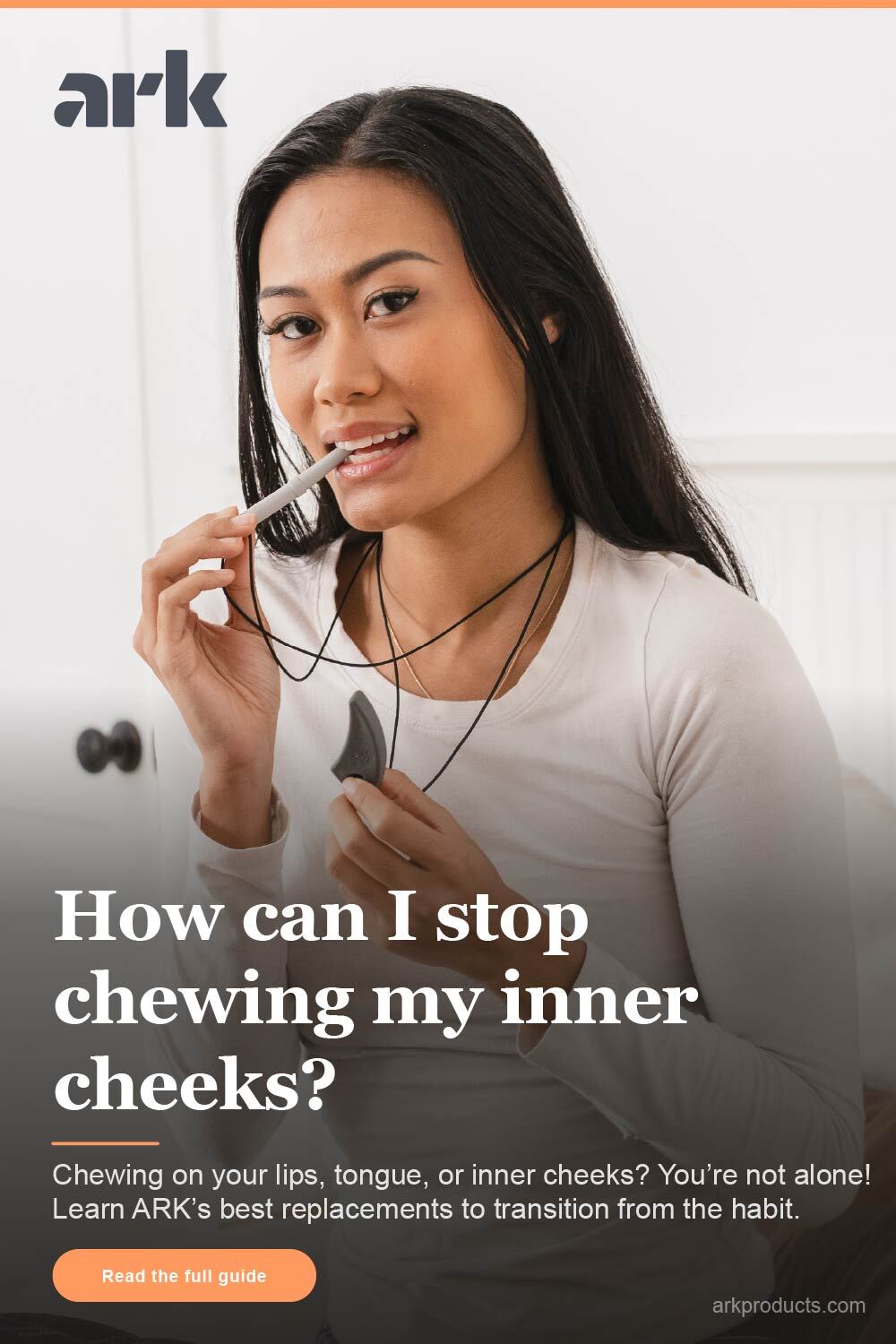
Why chew on your lips, cheeks, or tongue?
The same sensory mechanism drives intra-oral chewing as every other kind. Chewing can help promote calm, focus, and/or sensory regulation. It's grounding, repetitive, and often instinctual. The lips, tongue, and cheeks are always there, always available, right at the moment that you need to chew.
Stress and anxiety can intensify this. So does high cognitive demand like long meetings, difficult tasks or homework, sustained focus on something that requires a lot of concentration, etc. Many people notice they've been chewing the inside of their cheek only after the fact, without being aware it was happening while it was happening. For example, a common comment we get on our social media videos is, "I was chewing on my cheek while watching your video and didn't even realize!"
The best alternatives for lip, cheeks, and tongue chewing
Many people find that a thin or hollow chew tends to be a good fit to replace chewing on the lips, tongue, or cheeks. Because the things you chew on inside the mouth are softer and squishier, a hollow chew that compresses when you bite down helps to mimic that sensory experience.
A few of our favorite solutions:
Bite Tube Hollow Chew Necklace. This is the top recommendation for lips, tongue, and inner cheek chewing and it's the one we recommend most often when someone asks for help in this area. The hollow core gives it a collapsible, compressible feel when you bite down. It's also designed with teens and adults in mind: simple, neutral, discreet enough to wear anywhere. If you're not sure where to start - start here. And try the standard (softest) level first.
Hollow Grabber®. For kids or anyone who prefers a handheld option, the Hollow Grabber offers the same compressible quality in the familiar P-shaped Grabber form. The long extension reaches the back molars, where proprioceptive feedback tends to be needed most, and the hollow construction softens the feel considerably compared to the standard Grabber. The Hollow Bite Tube is another great option that's hollow all the way through, with a different diameter on each side as well.
Guitar Pick Chew Necklace. Specifically for lip biting, the Guitar Pick's small, thin shape is a natural fit. It mimics the thin, flat quality of what the lips are doing when they fold in on themselves. It's one of ARK's thinnest pendant options, which makes it a good match for the lighter, more frontal sensation of lip chewing rather than the deeper back-molar input that other behaviors often need. Another thin, front teeth and/or premolar necklace shape is the Loop Necklace. It's a wider design, but still thin and neutral in color and shape to keep things discreet if needed.
If you're not sure which option to get, or would like to try a variety of our top recommendations, we created the Lips, Tongue, & Inside Cheek pack with our top three recommendations to help you grab a quick solution.
A note on toughness levels: All ARK chews are available in 3 color-coded toughness levels. Because the lips, tongue, and inner cheeks are soft tissue, the sensation being sought after here tends to be softer and squishier rather than firm and resistant. So starting with standard (the softest level) is usually the right call. Going to XT or XXT is fine if needed, but there's no reason to start firm here unless you'd prefer a firmer feel or have chewed through chew tools in the past.
Tips
Keeping the chew tool very accessible, especially during the highest-demand times (at a desk, during screens, in situations known to trigger it) is a great idea. That way it's right there when you need it.
Paying attention to triggers like stress level, cognitive load, and particular situations can also help with being proactive rather than reactive about having the tool available.
For kids, consistent and calm redirection helps (a quick reminder to "use your chewy instead!"). It tends to take a few weeks of steady reminding before the redirect becomes automatic, and consistency from everyone in the child's environment makes a real difference.
When It's Worth Talking to Someone
For most people, a well-matched hollow chew tool and some awareness around triggers is enough. But if needed, it may be worth consulting with a dentist for any physical concerns and/or an occupational therapist to help build a broader sensory support plan aka "sensory diet".
About ARK Products — Founded by a speech-language pathologist and an engineer, ARK has spent over 25 years designing tools and resources for oral motor therapy, feeding, and sensory needs. All ARK products are made in the USA from food and medical-grade materials. Questions? Reach out anytime at support@arkproducts.com.
Related Reading:
- My Child Won't Stop Chewing Their Shirt - What's Going On?
- Why You Can't Just "Stop" Biting Your Nails
- Why Does My Older Child Chew on Everything?
Not sure which tool fits your need? Take our Chew Quiz →