

Why Your Child Chews More When Life Gets Messy
Posted by Taylor Hunt, Pediatric Occupational Therapist on 3rd Jun 2026
Chewing as Communication and Regulation
Chewing is often one of the first things parents notice and wonder about. It shows up in different ways across development and can feel confusing when it suddenly increases or decreases without a clear reason. From the lens of a pediatric occupational therapist, chewing is not random or simply a habit to eliminate. It is communication. It is regulation. And most importantly, it is often the nervous system doing exactly what it needs to do in that moment.
.
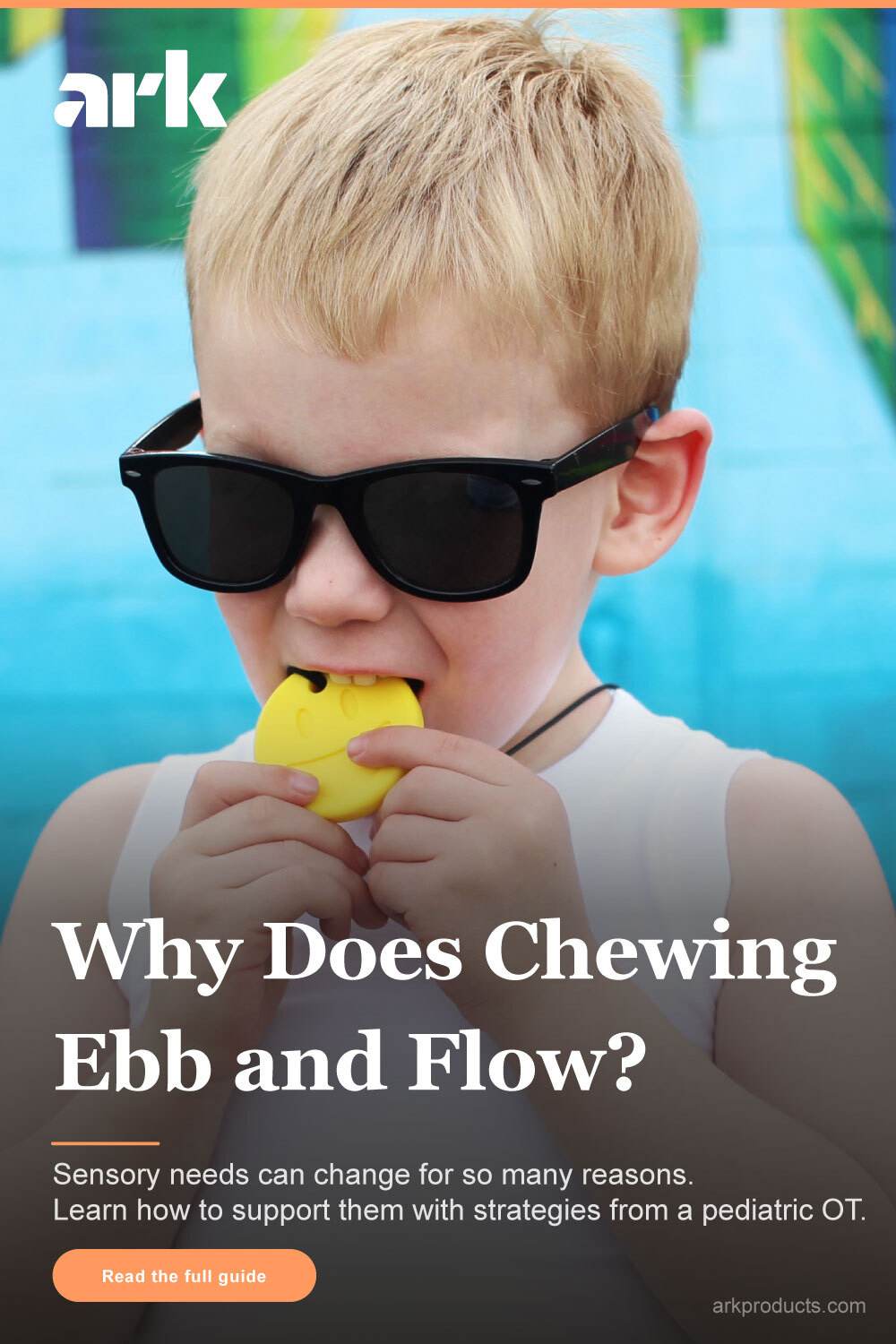
The Ebb and Flow of Chewing
What I see time and time again in practice is that chewing ebbs and flows alongside a child's internal state. During times of stress, transitions, or unpredictability, chewing tends to increase. During periods of calm, structure, and predictability, it may decrease or shift into more socially expected forms like eating snacks or gum. This pattern is not accidental. It reflects how closely oral sensory seeking is tied to the body's regulation systems, particularly the role of proprioception.
Proprioception is the body's sense of where it is in space and how much force it is using. It is deeply organizing for the nervous system. When a child engages in activities that provide proprioceptive input, such as pushing, pulling, crashing, or chewing, the body often becomes more grounded, more coordinated, and more regulated. Chewing, in particular, delivers strong input through the jaw muscles, which are some of the most powerful muscles in the body. This input travels to the brain in a way that can help modulate arousal levels, supporting a child who is either overstimulated or under-aroused.
Why Chewing Increases Under Stress
When we view chewing through this lens, it begins to make sense why it increases during stress. Think about transitions, for example. A child moving from a preferred activity to a non-preferred one is experiencing a shift not just in behavior expectations, but in their internal state. Their nervous system may move toward a fight-or-flight response, even if it does not look dramatic from the outside. Chewing can act as a grounding strategy in that moment, offering the proprioceptive input needed to organize the body and brain.
The same is true during times of boredom or low stimulation. When a child is under-aroused, they may seek input to "wake up" their system. Chewing can provide that alerting input, helping them feel more present and engaged. This is often why chewing increases during quiet classroom activities, long car rides, or unstructured time. It is not about defiance or distraction. It is about regulation.
Schedule changes and disruptions in routine can also lead to noticeable increases in chewing. Children rely heavily on predictability to maintain a regulated state. When that predictability is removed, the nervous system has to work harder to process what is happening. Chewing becomes a tool to navigate that uncertainty. It is a way for the body to create a sense of consistency when the environment feels inconsistent.
How to Support Chewing in Functional, Effective Ways
Understanding this ebb and flow is essential, but the next step is knowing how to support it in a way that is both functional and respectful of the child's needs. The goal is not to eliminate chewing, but to guide it into safe, appropriate, and effective forms while also expanding the child's toolbox for regulation.
One of the most important strategies is to proactively build sensory routines that include proprioceptive input throughout the day. When a child receives regular, intentional input, their nervous system is less likely to seek it in unpredictable or disruptive ways. This might look like incorporating heavy work activities before transitions, offering crunchy or chewy snacks at key times, or using oral tools designed for safe chewing. The timing of these supports matters. Providing input before a known challenge, such as a transition or a change in routine, can help the nervous system stay ahead of dysregulation rather than constantly trying to catch up.
At the same time, it is important to recognize that routines are not always consistent. Life happens. Schedules shift, vacations disrupt structure, and unexpected events occur. This is where flexibility within sensory routines becomes crucial. Instead of relying on rigid schedules, I often encourage families and educators to think in terms of patterns and options. If a child typically benefits from proprioceptive input in the morning, what are a few different ways that could be provided depending on the context? If chewing increases during transitions, what tools or strategies can travel with the child across environments?
Adapting sensory routines when structure disappears might mean keeping a small set of go-to regulation tools easily accessible. It might mean embedding opportunities for movement and input into everyday activities, like carrying groceries, helping with chores, or engaging in play that naturally involves pushing and pulling. It might also mean normalizing chewing as a valid strategy and providing safe alternatives rather than trying to stop the behavior altogether. Handheld chew tools and chewelry are designed exactly for this purpose — easy to bring along, durable, and effective across environments.
Co-Regulation, Environment, and the Role of Relationship
Another key piece is co-regulation. Children do not learn to regulate in isolation. They learn through relationships. When a caregiver or therapist responds to chewing with curiosity rather than correction, it creates space to understand what the child's nervous system is asking for. This might sound like noticing patterns, offering support before escalation, and modeling other regulation strategies alongside chewing. Over time, this helps the child build awareness of their own needs and expand their ability to choose from multiple strategies.
It is also important to consider the environment. Sometimes, increased chewing is a signal that the environment is asking too much or not offering enough support. This could be related to sensory overload, cognitive demands, or social expectations. Making small adjustments, such as reducing background noise, offering visual supports, or breaking tasks into smaller steps, can reduce the need for constant regulation through chewing alone.
How Chewing Evolves Over Time
As children grow, their use of chewing may evolve. What starts as frequent oral seeking in early childhood may shift into more subtle or socially integrated forms over time. This progression is not about eliminating the need for proprioceptive input, but about expanding how it is accessed. Supporting this evolution requires a balance of honoring the child's current needs while gently introducing new options.
Ultimately, chewing is a powerful example of how the body communicates and self-regulates. When we shift our perspective from trying to stop the behavior to understanding its purpose, we open the door to more effective and compassionate support. We begin to see chewing not as a problem, but as a strategy. And from there, we can help children build a broader, more flexible toolkit for navigating the ups and downs of their daily lives.
In a world that often expects children to adapt quickly to changing demands, recognizing and supporting these regulation strategies becomes even more important. Chewing is just one piece of the puzzle, but it is a meaningful one. It reminds us that behavior is not random. It is rooted in the nervous system. And when we meet those needs with intention, we are not just addressing the behavior. We are supporting the whole child.
Taylor Hunt is a pediatric occupational therapist based in Charleston, South Carolina and the owner of Sensory Spaces. She specializes in designing sensory-smart environments for families and educating caregivers on sensory processing to support regulation and development.
Related Reading:
- Why Does My Older Child Chew on Everything?
- 10 Tips for Kids Who Need to Chew — An Oral Sensory Diet
Not sure which chew tool is the right fit? Take our Chew Quiz →
.