

My Child Won't Stop Chewing on Their Shirt - What's Going On?
7th Apr 2026
It's Not a Bad Habit - It's a Need
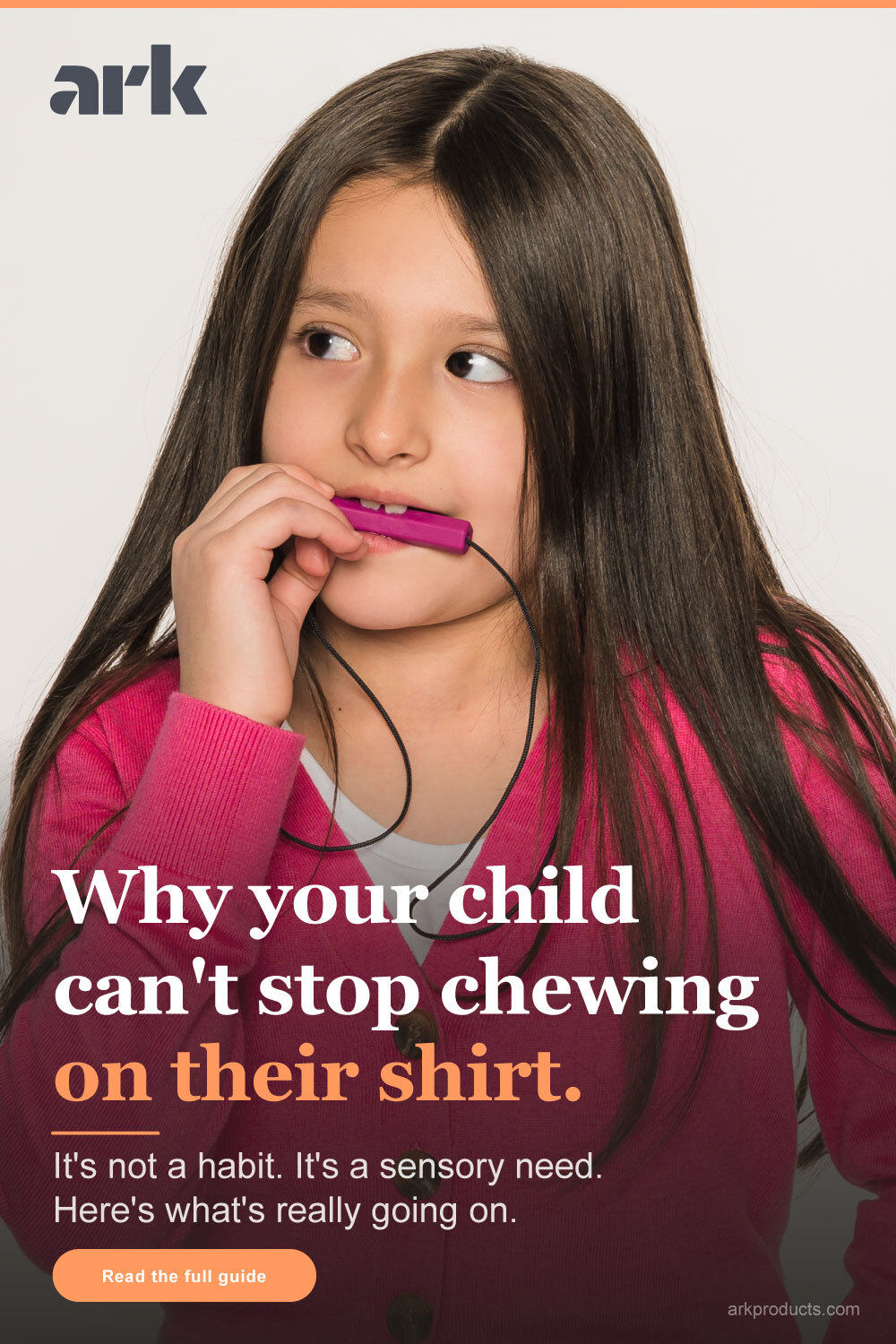
If your child has ever come home from school with soaked collars or sleeves or holes in their shirts, you're not alone. Chewing on clothing is one of the most common concerns we hear from parents, and we completely understand the frustration that comes with it. Shirts get ruined. The sleeves stretch out. And at some point, you start wondering: is this normal? Should I be worried? Why can't they stop?
Here's the short answer: they probably can't stop, because they're not doing it on purpose. This simple shift in perspective can help you and your family understand your child's need to chew and save some frustration!
When a child chews on their shirt collar, sleeves, or neckline (or anything else), it's almost always meeting a sensory need. Chewing provides something called proprioceptive input to the jaw - deep pressure feedback that the brain finds calming and organizing. Think of it like a built-in stress relief valve. The repetitive motion of chewing is grounding and helps the nervous system settle.
This is actually the same reason why some adults chew gum during a stressful meeting, bite their nails during a scary movie, or crunch through a bag of pretzels after a long day. The jaw is one of the strongest joints in the body, and the deep pressure it generates when you chew sends powerful calming signals to the brain. Kids have figured this out instinctively. They just don't have the vocabulary to explain it.
So when your child reaches for that shirt collar during homework, or starts biting on their sleeve during a noisy classroom activity, their body is actually doing something pretty smart. It's self-regulating.
.
Why Clothing Specifically?
A shirt collar or sleeve is always there. It's accessible. A child doesn't have to ask permission for it, find it in a backpack, or wait until a certain time to use it.
That convenience is huge, especially for kids who are still developing the self-awareness to recognize when they need sensory input and the self-advocacy skills to ask for it. Clothing becomes the path of least resistance; it's the thing they reach for without thinking, because their body is looking for regulation and the shirt is right there.
You may notice that chewing gets worse during specific situations: transitions (moving from one activity to another), high-demand tasks (reading, writing, math), noisy or crowded environments, new social situations, or times of general stress, anxiety, or tiredness. These are all moments when the nervous system is working harder than usual, and chewing helps one calm and self-regulate.
What's Actually Behind It?
Chewing on clothing usually traces back to one or a combination of these things:
- Stress and anxiety. Everyday stress like frustration, tiredness, a change in routine, etc. can trigger the need to chew. So can bigger-picture stress like starting a new school year, dealing with a family change, or navigating social pressure. Chewing often ebbs and flows relative to how much stress a child is under and how well they're able to manage it at that moment.
- Sensory processing differences. Children with sensory processing needs often experience the world more intensely. Lights might be brighter, sounds might be louder, and the general volume of incoming sensory information can be overwhelming. Chewing is one way to organize all of that. It's a form of self-stimulation (sometimes called "stimming") that helps the brain sort through what it's receiving. This is especially common in children with autism, ADHD, and sensory processing disorder.
- Focus and concentration. This one surprises a lot of parents, but chewing can actually help some children pay attention. The repetitive, rhythmic motion filters out background distractions and helps the brain lock in on a task. You might notice your child chews most during homework, reading, or test-taking because it's helping them focus.
- Need for more proprioceptive input. Some kids just need more deep-pressure input throughout the day than others. Their proprioceptive system (the sense that tells us where our body is in space) may not be processing as efficiently, and chewing is one way that they compensate. These are often the same kids who love bear hugs, crash into furniture, or prefer heavy/weighted blankets at bedtime.
Why "Just Stop" Doesn't Work
If chewing is meeting a genuine sensory need, asking a child to stop is like asking someone who's cold to stop shivering. They may be able to stop for a minute or two, but the underlying feeling or need doesn't go away. It just shows up somewhere else. Maybe they start biting their nails, picking at their skin, tapping their foot, or getting more agitated and unfocused.
The more effective approach is to redirect the chewing to something that's designed for it - to something safe, durable, and purposeful - rather than trying to eliminate the behavior altogether.
What Actually Helps:
Provide a designated chew outlet. ProvidingThis is the single most effective thing you can do. Give your child something they're allowed to chew on / something specifically designed to be safe for that purpose. There are a lot of options depending on what your child prefers:
- Shirt Collar Chewing Necklace: A chew necklace is a great, easily accessible option to redirect shirt collar chewing. A horizontal chewelry option like our Chewlinder, Krypto-Bite Tube, or Chevron (available separately or bundled together here for a savings) is a great pick - the horizonal design helps to mimic the specific motion of pulling up the shirt collar to chew. Many of our designs are discreet enough that other kids don't even notice them, which matters a lot to older children and teens.
- Pencil topper chews are another natural swap, especially if your child tends to chew most during school. These slide onto the end of a standard #2 pencil, so they're another option that's right there when they need it.
- Handheld chews like our Grabber work well for younger kids or children who prefer something they can hold.
All of our chew tools come in three toughness levels: Standard (softest, for mild chewers), XT/Medium (firmer, for moderate chewers), and XXT/Toughest (very firm, for avid/aggressive chewers). If your child is chewing on shirts without creating any holes - definitely choose the standard level. If they can bite/chew holes in shirts very quickly (within days/hours) - go with XXT. Choose the middle XT level for anywhere in between.
Increase proprioceptive input throughout the day. If chewing is driven by a broader need for deep pressure, adding more "heavy work" activities to your child's routine may reduce the overall chewing frequency. Things like carrying groceries, pushing a laundry basket, doing wall push-ups, or jumping on a trampoline all provide proprioceptive input that feeds the same system. An occupational therapist can also help you build what's called a "sensory diet", aka a plan of activities spread throughout the day that helps your child stay regulated.
Add oral motor activities. Beyond chewing, other activities that engage the mouth can help too: drinking thick smoothies through a straw, eating crunchy or chewy foods (carrots, dried fruit, bagels), blowing bubbles, or blowing through a whistle or party horn. These all provide the kind of oral input that the brain is looking for. Parents can also try providing oral sensory input through gum massage and/or vibration.
Pay attention to timing and triggers. Keep a mental note of when chewing happens the most. For example: Is it always during homework? Right after school? In the car? At bedtime? Identifying patterns helps you get ahead of it - you can offer the chew tool or a sensory break before the chewing ramps up, rather than reacting to it after.
Talk to their school. Many teachers are now familiar with sensory tools and are open to having them in the classroom. A quick conversation or a note from your child's therapist can go a long way toward making sure your child has access to what they need during the school day. In some cases, a chew tool can be included in the child's IEP and provided by the school.
A Note About "Growing Out of It"
Some children do eventually stop chewing on clothing as they get older, especially if the habit is tied to a specific developmental stage or a temporary source of stress. But some children won't, and many adults still have oral sensory needs too.
Needing to chew a legitimate sensory strategy. The goal isn't to make the need go away. It's to make sure it's being met safely, and that your child has tools that actually work for them.
When to Seek Help
If chewing on clothing is part of a bigger picture (if your child is also struggling with focus, emotional regulation, sensory sensitivities, anxiety, daily routines, etc.), it may be worth connecting with a professional. For example, an occupational therapist can assess your child's sensory profile and put together a helpful, comprehensive plan if needed/applicable.
About ARK
Founded by a speech-language pathologist and an engineer, ARK has spent over 25 years designing tools and resources for oral motor therapy, feeding, and sensory needs. All ARK products are made in the USA from food and medical-grade materials. If you have a question, reach out to our customer support team anytime at support@arkproducts.com.
Learn More:
- Why Does My Older Child Chew on Everything?
- 10 Tips for Kids Who Need to Chew — An Oral Sensory Diet
Ready to find the right chew tool? Take our Chew Quiz →
.