
How do you help kids stay regulated on Halloween?
15th Oct 2026
Halloween is genuinely fun, but it can also be genuinely overwhelming and ripe for sensory overload. It's not only a lot of input, but also a lot of input all at once.
Halloween stacks nearly every kind of sensory input into one evening. Potentially scratchy / uncomfortable / new costumes to wear. Face paint on the skin. Motion-activated screaming skeletons. Dark streets. Flashing porch lights. Crowds of people, and in costumes, and moving unpredictably. A change in schedule/routine. And a pile of sugar on top of it. Any one of those may (or may not) be manageable on its own. All of them together...often after a full school day...is a different situation entirely.
.
.
Timing matters (Regulate first, then do the exciting thing)
When there's more to take in, the nervous system usually needs more organizing input to stay steady. One of the best ways to help here is by providing deep input to the muscles and joints, aka what occupational therapists call "heavy work" and proprioceptive input.
Before we get into examples, it's important to note that the timing of when you do this is also important. Putting regulating activities before the big ask, not after things get hard, can be really helpful. Ten or fifteen minutes of heavy work before the party, or before you head out trick-or-treating, tends to go a lot further than trying to help someone come back down while you're out and about.
The same goes for the other end of the night. Making sure there's wind-down with some deep input built in - a bath, a tight blanket burrito, a few minutes of squeezing and pushing - can make bedtime less of a fight.
Halloween heavy work ideas
So what is heavy work? Heavy work is just any activity that pushes or pulls against the body - carrying, pushing, hanging, squeezing. It needs no equipment, it costs nothing, and it can be both fun and functional to incorporate into your every day. To learn more about the benefits behind this, see our post on heavy work activities.
Any heavy work activities can help, but if you'd like to make it extra spooky for the holiday, below are some ideas for a fun holiday twist:
- Frankenstein stomps. Big, slow, heavy steps across the room with arms straight out. Count them out loud. Stomp down the hallway, stomp back.
- Monster wall pushes. Hands flat against the wall, push like you're holding the haunted house door shut. Ten seconds, three rounds, done.
- Pumpkin hauling. Carry pumpkins from the car to the porch one at a time, hugged to the chest. Bags of candy, crates of decorations, or a sack of leaves all count too.
- Mummy wrap. Roll them up snug in a blanket for some deep pressure, or let them wrap you in toilet paper and then bust out of it.
- Stirring the cauldron. A bucket of water with plastic spiders in it and a long spoon. Add sand or ice to make the stirring harder.
- Bat hangs. Hanging from a bar or the monkey bars, and if it's safe where you are, hanging upside down. Being upside down is intense input, so watch how they respond and keep it short.
- Spider crawls. Bear crawl or crab walk along a "web" of painter's tape on the floor. Backwards is harder, which is the point.
- Graveyard rake. Rake leaves into a pile, jump in, rake them up again. Heavy work and yard work at the same time!
You can theme almost anything you already do this way - hauling, pushing, pulling, hanging, squeezing, etc. What matters is the resistance, not how you spin it.
A few mouth-based ones
Oral input can be organizing too, and these double as party games:
- Ghost races. Blow cotton balls across the table through a straw. First ghost to the finish line wins. Curvy and bendy straws make it work harder.
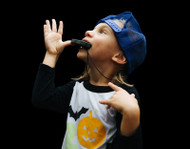
- Ghost howls. Party blowers, whistles, and pinwheels are all go-to options for organizing/calming input.
- Crunchy snack table. Apple slices, carrots, pretzel rods, popcorn. These firmer, resistant foods provide deeper input to the jaw and masseter muscle.
- Thick potions. Apple cider, a smoothie, a milkshake through a straw. The thicker the drink, the more the mouth has to work for it.
As always, food-based activities depend on the individual - allergies, textures they tolerate, and where the individual's chewing / eating skills are should be taken into account.
Something to chew on, literally
Chewing is one of the ways a lot of kids and adults stay regulated and calm and manage stress. Which means that in particular, chewing tends to show up more on days where there's more stress and anxiety, more to manage, more change and transitions, etc. If you or your child chew as a way to self-regulate, that's worth having a plan for.
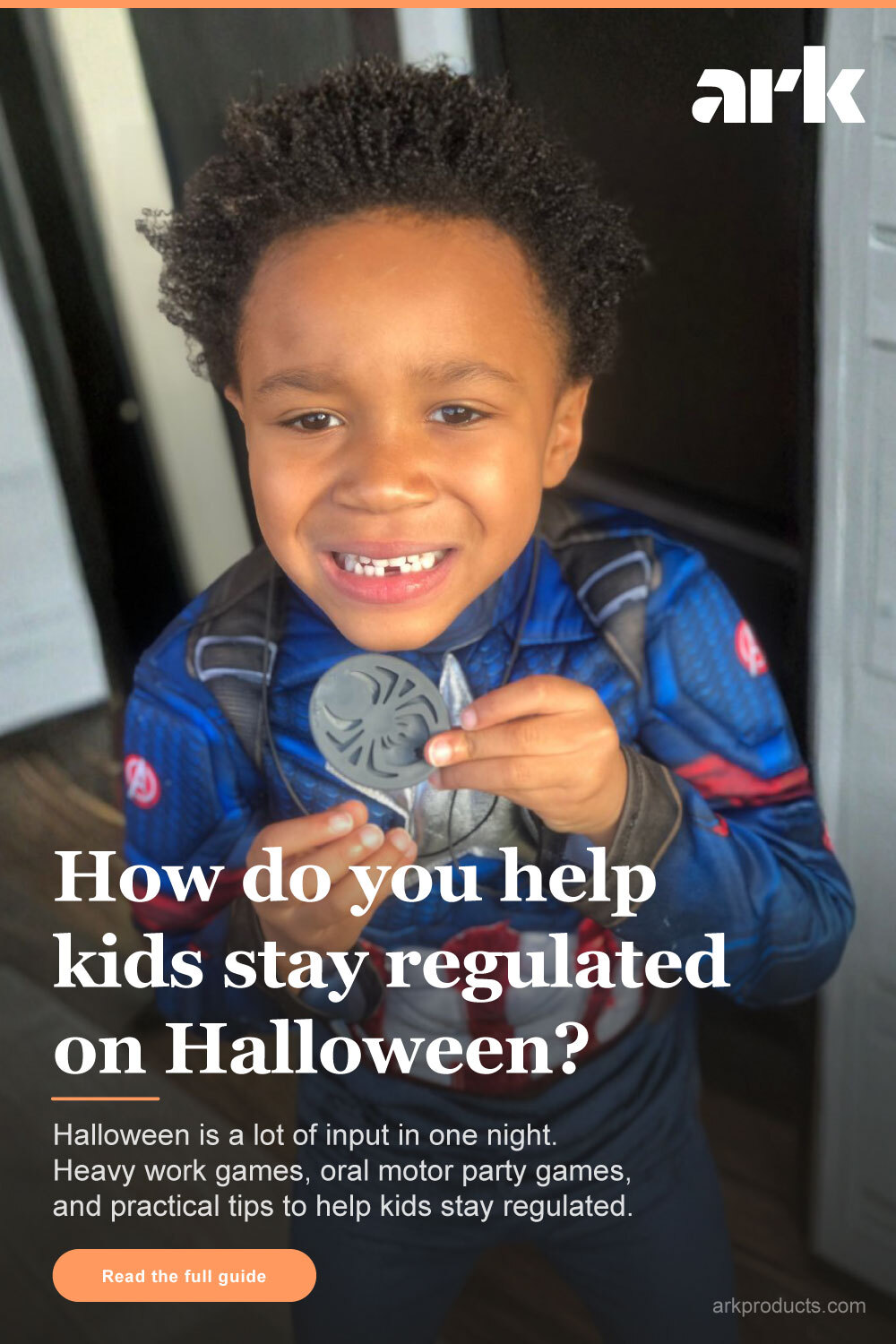
For on-the-go trick-or-treating, chewelry aka chewable jewelry is a great option - that way it's always with you and stays on. There are several Halloween-themed options available including the Bat Bite, Spider Bite, and limited edition BOO Chew and ARK-o'-Lantern. As well as many others that would fit into a costume like the Dino-Bite, Snowflake, Seashell, Pirate Coin, Ninja Star, and more.
Put the chew necklace on before chewing starts, not after. So before you leave to go trick-or-treating.
What helps on the night itself
Wear the costume first. Twice, ideally. Cut the tags out, check the seams, put a soft layer underneath, and test the face paint on a small patch a few days early. Plenty of kids do better with makeup or a hat than a full mask.
Go early. More daylight, fewer crowds, quieter streets.
Agree on the route and the exit. Decide how many houses before you go, and pick a word or a hand signal that means "I'm done" and gets honored without debate. It's much easier to say "we can always do more next year" while everyone is still calm.
Bring the tools with you. Headphones, a chew, a familiar fidget in a pocket, water. Skipping the house with the fog machine and the screaming skeleton is also 100% okay.
Eat actual food first. Have real food before candy comes into the picture.
When it's more than one night a year
If staying regulated is hard most days and not just on October 31st, it may be helpful to talk to an occupational therapist. They can look at the whole picture and put together a sensory diet built around what each individual needs.
In short: front-load the input, keep the tools where they can be reached, and let the night be shorter if it needs to be. And if you're not sure which chew would suit, email our team with an age and a quick note about what's currently getting chewed. We love giving recommendations.
Not sure where to start? Take our Chew Quiz → or browse the Halloween favorites.
About ARK Products — Founded by a speech-language pathologist and an engineer, ARK has spent over 25 years designing tools and resources for oral motor therapy, feeding, and sensory needs. All ARK products are made in the USA from food and medical-grade materials. Questions? Reach out anytime at support@arkproducts.com.
Related Reading:
- Back to School Sensory Strategies
- Sensory Tools for a Calmer Classroom
- 10 Tips for Kids Who Need to Chew - An Oral Sensory Diet
- Why Does My Older Child Chew on Everything?
- 26 Birthday-Themed Oral Motor and Feeding Activities