

What is a chewing oral fixation, and what helps?
2nd Sep 2026
Fingernails. The inside of your cheek. A pen cap. A plastic water bottle cap. If you've spent a lot of your life reaching for something to bite or chew, you've probably heard it called an oral fixation - it's a familiar phrase, even if you've never used it yourself. What most people don't know is that there's a whole category of tools built specifically for an oral fixation in chewing. We often call it a 'need to chew'!
If this sounds like you, or your kid, or someone you love, you're not the only one, and there's nothing wrong with needing it. It's one of the most common things our customer service team hears about, in dozens of different forms. "I've had this my whole life and had no idea there was something made for it" is a message we receive all the time.
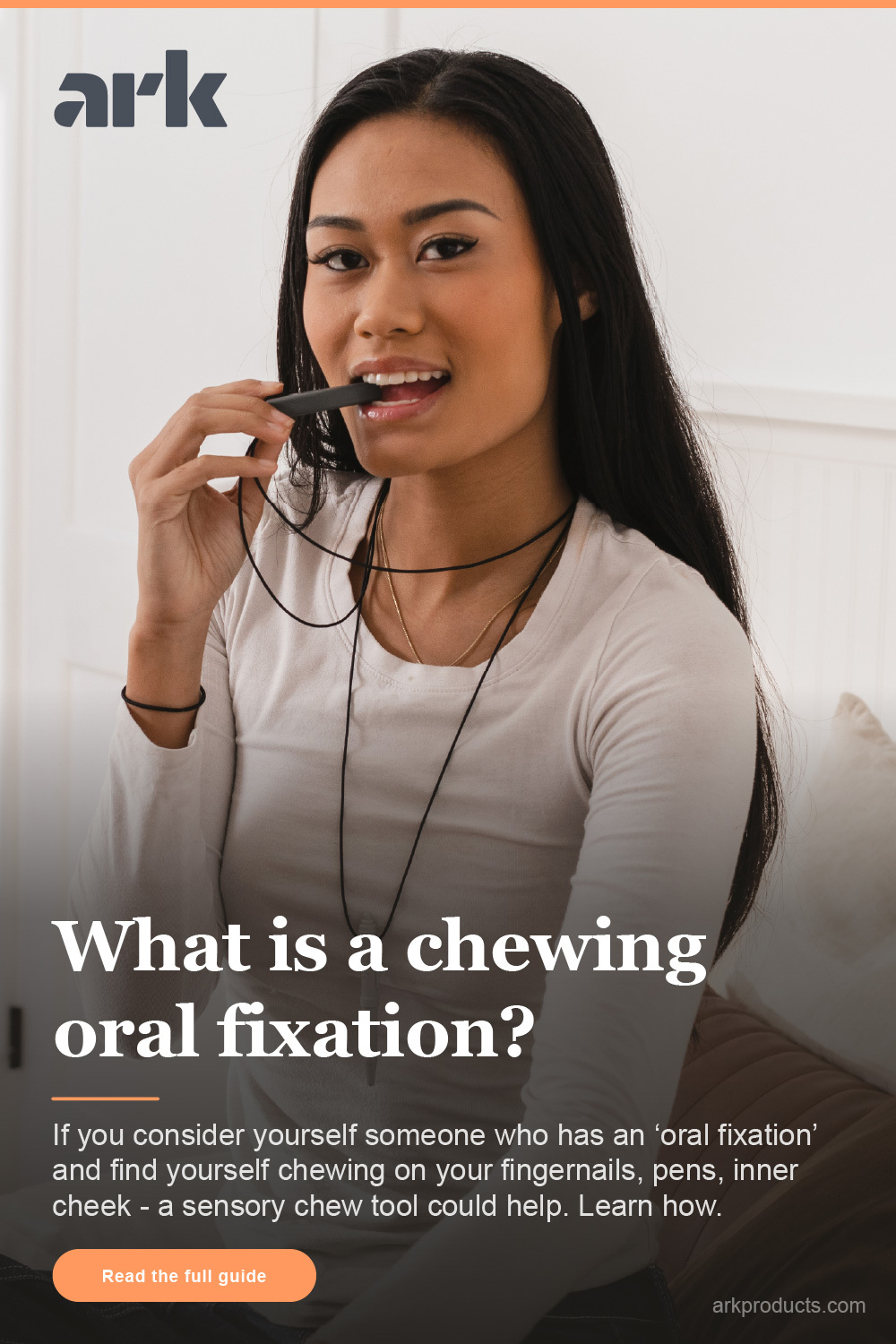
What an oral fixation through chewing can look like
Chewing gives the jaw a steady, repetitive kind of input that a lot of nervous systems find calming and organizing. It's one of the body's natural methods of self-soothing when you're stressed, anxious, overwhelmed or when you're trying to concentrate. For a lot of people, it's easiest to go for familiar, close-by things to satisfy this need to chew. Fingernails, lips, the tongue, and inner cheeks are super common. Pens and pencils, shirt collars, and straws are everyday objects that a lot of our customers chewed on before switching to a chew tool.
At its core, a chew tool is just a safe replacement for chewing on potentially unsafe items. We make them in necklace styles, handhelds, pencil toppers, and even chewable fidgets. Using a chew can help prevent damage on things you use daily (like writing utensils, the silicone straw on your reusable water bottle, or shirt collars and sleeves). Transitioning to a chew can also help reduce harm to your body (preventing sores on the inner cheeks and tongue from chewing, dry/peeling lips, or painful bitten fingernails and cuticles).
What helps with an oral fixation to chew
When we help someone choose a chew tool, the first thing we ask is what they're currently chewing on. Someone who nibbles pen caps and straws needs something different than someone who's chewed through a pencil by lunchtime, and both are completely normal starting points.
- Chewelry looks like regular jewelry with a built-in outlet for chewing - a good fit if you'd like something to easily keep with you throughout your day. Go for a long and slender shape like the Krypto-Bite if you tend to chew with your back molars. Front teeth and/or premolar chewers can pick any shape!
- Pencil topper chews are the easiest swap if pens and pencils are what's currently getting chewed down at a desk.
- Chews for teens and adults are built to be worn or carried without drawing attention, for anyone with an oral fixation chewing in class, at work, or anywhere else discretion matters. The necklaces are smaller, and available in neutral tones. A note - if you're a tough chewer who has chewed through things before, a small/thin chew won't be the best fit for durability. A wider shape like the Ring Necklace provides strength while still being more subtle.
Toughness matters as much as shape. Our tools come in three levels - Soft/Standard, XT/Medium, and XXT/Toughest - and the right one usually matches whatever you're already chewing on. If you're mostly a cheek-and-lip chewer, Soft is where we'd recommend you start. If you're the person who's gone through three pen caps this week, XT or XXT will hold up a lot longer.
One customer put it this way in a review: "I have an issue with pretty much just chewing everything - fingers, nails, other necklaces, anything small I can put in my mouth... these necklaces are great for all ages." Chew tools are for anyone who has a need to chew; whether you want a super bright, fun Pizza shaped chew necklace, or a subtle ParaBite that looks more like jewelry than a sensory tool.
If nails are the main thing, we've got a full breakdown of why nail biting happens and what helps. If it's pens and pencils at school, here's a closer look at the signs to watch for. If chewing tends to ramp up around focus or attention, that connection is worth understanding too. And if it's mostly shirts and sleeves, this list of favorites is a good place to start.
Not sure where to start? Email our team with an age and a quick note about what's currently getting chewed - we love giving recommendations and can help you find the right oral fixation alternatives.
When to loop someone else in
For a lot of people, a chew tool and a little trial and error is genuinely all it takes. If the chewing feels aggressive, is affecting daily life, or you just want more support figuring out the why, an occupational therapist or speech-language pathologist can help build out a fuller plan. You don't need a diagnosis to reach out to one, and you don't need one to reach out to us either.
Not sure which toughness level fits you? Take our Chew Quiz → or browse all chewing tools.
About ARK Products — Founded by a speech-language pathologist and an engineer, ARK has spent over 25 years designing tools and resources for oral motor therapy, feeding, and sensory needs. All ARK products are made in the USA from food and medical-grade materials. Questions? Reach out anytime at support@arkproducts.com.
Related Reading:
- Why You Can't Just "Stop" Biting Your Nails
- Why Do ADHD and Chewing Go Together?
- 5 Signs a Chew Tool Might Help at School
- 10 Favorite Chew Necklaces for Shirt Chewing
- Why Does My Older Child Chew on Everything?