
How to Choose a Sensory Tool for School
16th Sep 2026
A school day asks a lot of a body. Sit still, stay quiet, track a voice at the front of the room, tune out twenty-two other people doing twenty-two other things, then get up, move through a loud hallway, and do it again. For plenty of students that's manageable. For plenty of others it takes real effort to hold together, and the effort has to go somewhere.
.
.
That's usually what you're seeing when you notice the chewed collar, the shredded eraser, the nails bitten down, the pencil tapping, the leg bouncing under the desk. Those aren't the problem. They're the solution someone already found.
A student who chews a shirt sleeve through the morning has, without being taught, identified something that helps them get through the morning. The sleeve isn't the right tool - it ruins clothes, it draws attention, it holds saliva, and it doesn't give the right feedback / sensory input. But the instinct behind it was right.
So the useful question isn't how to stop it. It's what would do that job better, and where in the day it's needed most.
One thing to notice before you choose anything: where the substitute is showing up. Mouths look for something to chew - collars, sleeves, erasers, straws, nails. Hands look for feedback - picking at tape, peeling erasers apart, clicking pens, running fingers along walls. Bodies look for movement or pressure - rocking the chair back, bouncing a leg, a fourth trip to the pencil sharpener. Plenty of people have more than one going at once, in which case start with whichever is causing the most trouble.
Then it's a question of when. Three parts of the school day tend to take the most out of people.
Getting there, and getting between classes
Hallways and transitions are usually the hardest part, because they're loud, crowded, and unpredictable all at once, and they happen without much warning.
A few adjustments cost nothing. Wearing the backpack during transitions adds calming weight, and it's already there. Lining up first or last rather than in the middle cuts down on getting bumped. And it's worth asking whether transitions can happen a couple of minutes early or late to skip the crush entirely.
For the tool itself, transitions are where the form factor matters more than anything else, because whatever helps has to already be on the body when the bell rings.
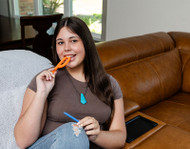
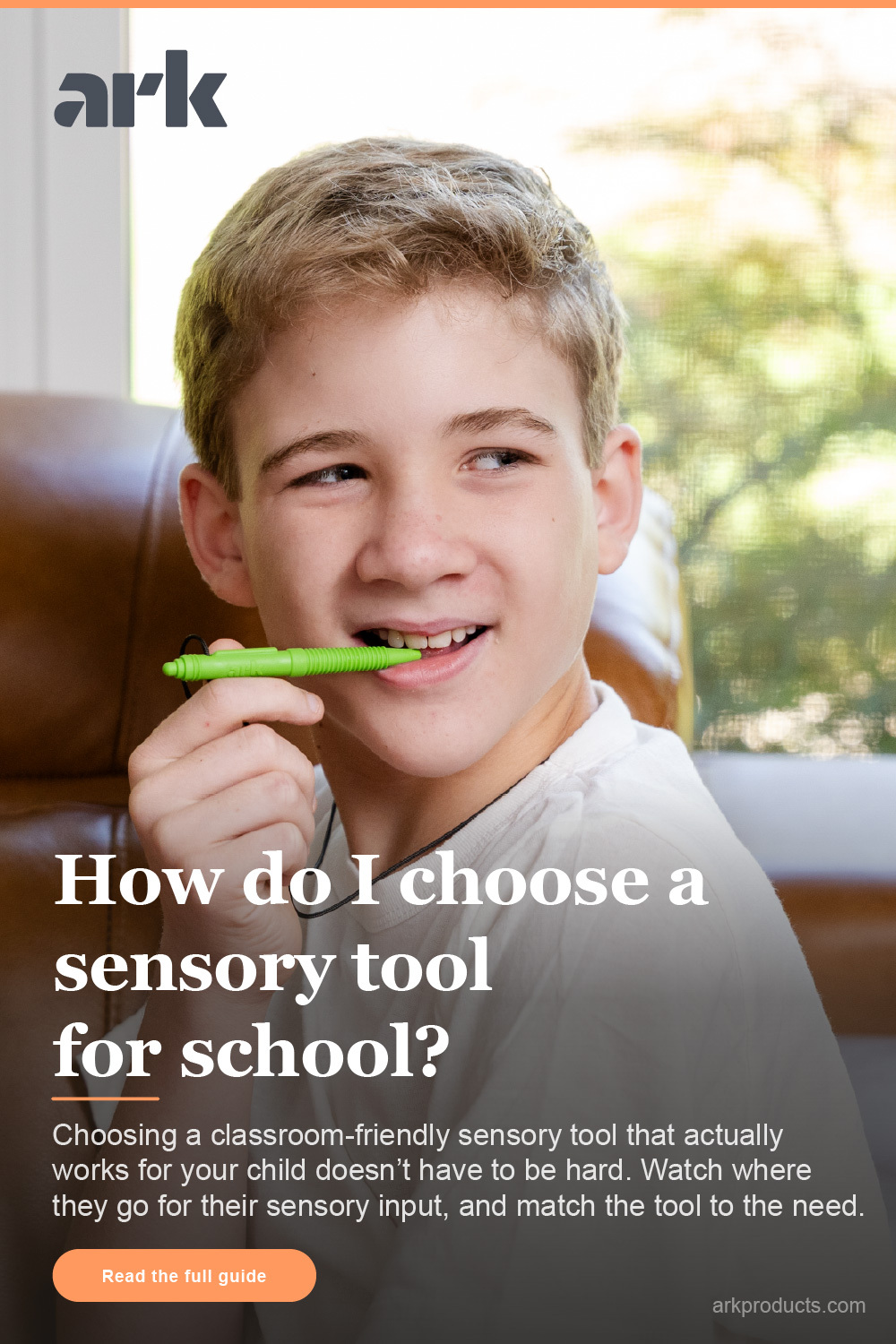
If the substitute is oral, a chew necklace is the most practical answer for a school day. It stays on, so there's nothing to leave in a desk or lose in a cafeteria, and it's discreet enough for a middle schooler who doesn't want to explain it. Krypto-Bite® Gem Chew Necklaces are smooth and low-profile, on a breakaway clasp so they come apart if they catch on anything. If they have a specific thing they chew on, our solution-based chew packs can narrow down options - in our experience, we see requests for shirt chewing, nail biting, and lip/tongue/inside cheek biting the most.
If it's hands rather than mouth, the same logic applies in a different shape. A SensaStones™ Worry Stone Keychain fits in a palm or a pocket and clips to a backpack - smooth on one side, textured on the other, so there's a choice built in depending on what feels right that day.
The long stretches at a desk
Long stretches at a desk are where fidgeting, chewing on collars, and chewing on pencils tend to show up most. It's the least forgiving part of the day: sustained attention, sustained stillness, and not much built-in relief.
Chair pushups are an easy way to get input without leaving the seat. Push down on the chair to lift the body up, or put the hands underneath and try to pull up while staying seated. Count to ten or twenty. Volunteering to pass out papers or collect materials works too, since it builds a legitimate reason to get up and move into a day that doesn't otherwise have one.
For chewing, the most practical option is putting the input right where the chewing already happens. A chewable pencil topper like the Krypto-Bite Topper slides onto a standard pencil and stays there through the work, with nothing extra to keep track of and nothing to explain. ARK chewable pencil toppers come smooth and textured, and that's the choice worth paying attention to - the textured toppers like the Brick Stick tend to give noticeably more feedback, which some kids want and others find like a lot. If you're not sure which, it's a reasonable thing to try both ways.
Homework, after a full day
By late afternoon the tank is usually empty. Homework lands on a nervous system that's been working since seven in the morning, and pushing straight into a worksheet tends to go badly.
Move first, not after. A few minutes of something physical before sitting down usually buys more focus than any amount of insisting once the sitting has already gone sideways.
Handwriting itself is worth treating as its own case, since it asks for grip, pressure, letter formation, and staying in the chair all at once. If the hand doesn't have a clear sense of where it is, all of that gets harder. A vibrating pencil attachment for the Z-Vibe adds gentle vibration while writing, which can help wake up the hand's sense of where it is and how hard it's pressing. It's quiet enough for a shared table, and handwriting tends to stay legible.
Access is what decides whether any of it works
A tool in a drawer doesn't get used. A tool that has to be requested from an adult, out loud, in front of a room, gets used once and then quietly forgotten.
The whole advantage of a necklace, a pencil topper, or something that clips to a backpack is that it's already there - on the body, on the desk, in a pocket - at the moment it's needed, which is rarely a moment anyone saw coming.
Start with one. Watch what happens. The best sign is what a kid reaches for on their own, without being reminded.
If you're not sure where to start, email our team with an age and a bit about what's currently getting chewed, tapped, or picked at - we love giving recommendations.
Not sure where to start? Take our Chew Quiz →
About ARK Products — Founded by a speech-language pathologist and an engineer, ARK has spent over 25 years designing tools and resources for oral motor therapy, feeding, and sensory needs. All ARK products are made in the USA from food and medical-grade materials. Questions? Reach out anytime at support@arkproducts.com.
Related Reading:
- Back to School Sensory Strategies
- Sensory Tools for a Calmer Classroom
- 10 Tips for Kids Who Need to Chew - An Oral Sensory Diet
- Why Does My Older Child Chew on Everything?