
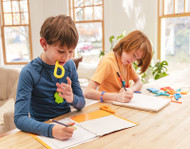
Why do ADHD and chewing go together?
24th Jul 2026
If chewing and ADHD seem to go together, you're not imagining it. It's one of the most common things we hear about, whether someone is ordering for their child, a loved one, or for themselves. It can show up in a lot of different ways depending on what's within reach. Wet shirt collars. Flattened pen caps. Hoodie strings, pencil erasers, headphone cords, a game controller with teeth marks on the grips, the inside of a cheek, the ends of your glasses, etc.
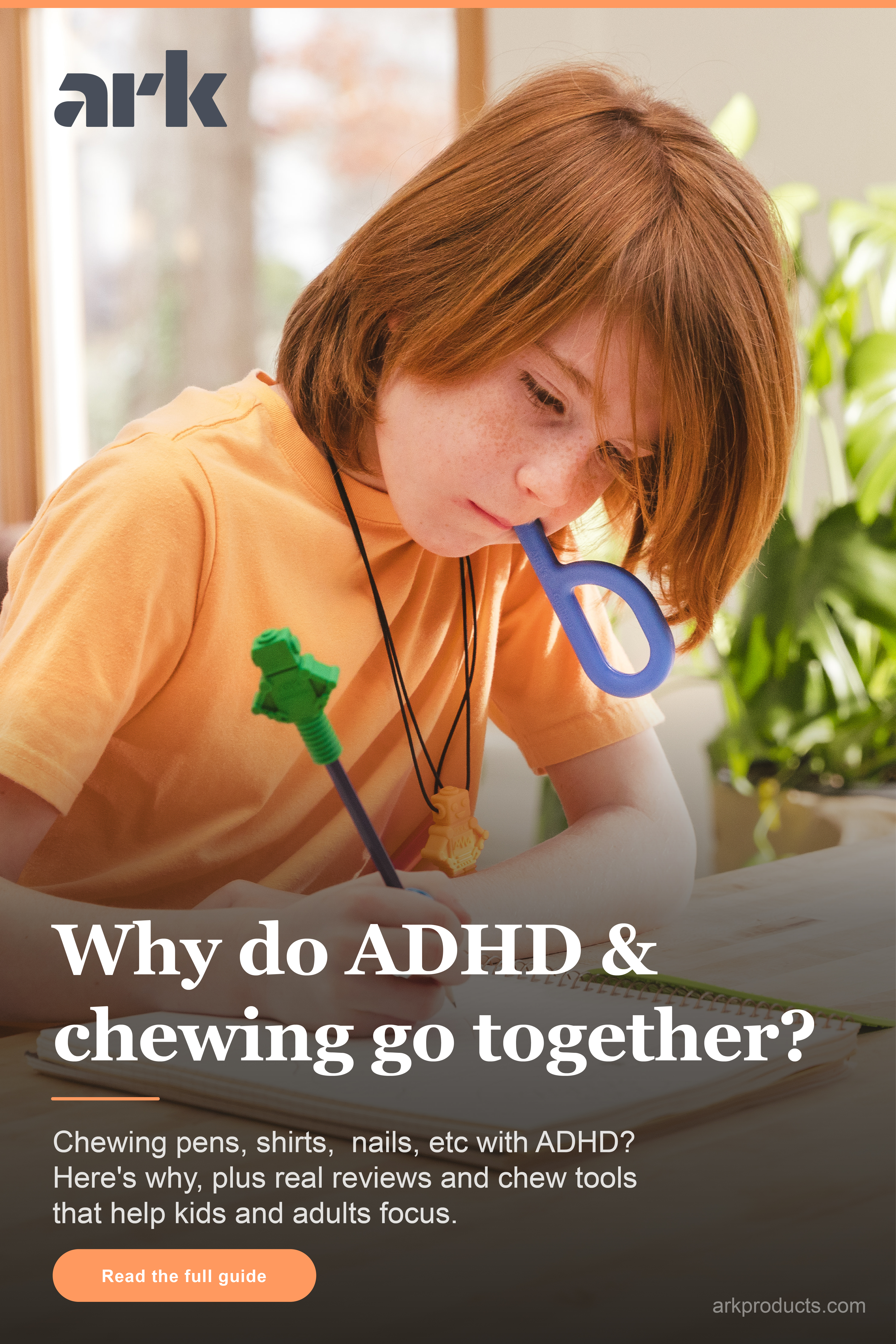
Why do ADHD and chewing go together?
Chewing gives the jaw steady proprioceptive input, which is just a technical way of saying deep-pressure feedback from the muscles and joints. That kind of input tends to be organizing and calming for the nervous system. It's the same reason so many people chew gum while they study or crunch ice when they're wound up.
For an ADHD brain that's always reaching for a little more stimulation to stay locked in, something repetitive and resistant to chew on can quietly do that job in the background. It gives restless energy a place to go and helps hold focus without much conscious effort. (If you want the fuller sensory explanation, our post on why some kids and adults need to chew gets deeper into the why behind it.)
Plenty of people describe it exactly this way:
"I'm an adult with ADHD who benefits from chewing to focus and chews habitually, subconsciously. On behalf of all the things that are no longer being damaged by my chewing, thank you." — Anonymous
The goal isn't to make the chewing stop
Half the time you're chewing without even noticing it, which is exactly why willpower isn't the fix. The need to chew is still there. What can be helpful is changing is what gets chewed. Pens, nails, shirt collars, and the inside of a cheek all come with real downsides, like ruined clothes, sore skin, a clenched jaw, picking at skin, etc. They're all the same instinct reaching for input, which is why one good outlet often can help take the edge off more than one of them at once.
So the move is simple: a safe, purpose-made outlet can help give you the upsides of chewing without the downsides. When we help someone choose a chew tool, the first thing we ask is what the person already chews on. Match the shape, firmness, and texture to that, and you're far more likely to land on something they'll actually use.
What tends to help
A chew necklace for all-day access. For most people, this is the starting point. A chewable necklace stays on and stays available, so the chewing has somewhere to go the moment the urge shows up, at a desk, in a classroom, or on the couch during a video game. Our chewelry looks like regular jewelry, and the longer shapes reach the back molars, which is often where chewing can provide the most input to the jaw. The Krypto-Bite necklace is a go-to favorite for exactly this reason.
"I bought this for my seven-year-old daughter that has ADHD. It helps calm her and also helps her focus during school." — a parent of a seven-year-old
"This has been a great product for our ADHD son. This is usually during homework or gaming, or any stressful or exciting things. He has stopped chewing the shirts and this necklace has become his go-to." — Michele
Something subtle for teens and adults. Older kids and adults often more discreet, hence these chews for teens and adults in more neutral colors and shapes.
"I'm a 21-year-old with autism and ADHD, and this saved my mouth. I mindlessly chew on a lot of things including my lips, and this was perfectly sized to chew on while I'm at work and slip away when needed." — Cam
Pencil toppers for chewed-up pens and desk work. If most of the chewing happens on pencils, pens, and erasers, a chewable pencil topper meets the chewing right where it already lives. It's a natural fit for a homework routine, a lecture, or a desk job.
"As a young adult with ADHD, I needed something subtle to take to work with me. This is perfect. Has saved my pens and probably my teeth." — Emma
"Our ADHD son is a high school senior and chews on his nails nonstop. The pencil chew top in firm has been a godsend. He chews on it and ignores his hands. The literature that came with it helped him feel okay about using the product, and that he isn't alone." — Clarity Mae
Something tougher for heavy, aggressive chewers. A sturdier handheld option like the Grabber or Y-Chew gives a lot more to bite down on, and both reach the back molars easily.
A few tips:
Put the chew tool on before the chewing usually starts, so it's already there when focus dips or stress climbs. Build in chew breaks during long, seated stretches like homework or reading. And know that oral sensory needs often come with a need for movement, so heavy work and active play (climbing, carrying, monkey bars, swimming - aka anything that pushes and pulls against the body) can take some of the pressure off the mouth too.
A chew tool handles the day-to-day, but if the chewing is intense, causing sores, or getting in the way of school, work, or sleep, consulting with an occupational therapist may be helpful. They can help look at the bigger picture and build a plan around it.
In short: chewing is common, it makes sense, and it can be really helpful for calming and focusing. Give it a safer outlet, and it can keep helping without the chewed-up pens, ruined shirts, and sore fingers coming along for the ride.
Not sure which chew tool fits? Take our Chew Quiz → or browse chew tools to focus.
About ARK Products — Founded by a speech-language pathologist and an engineer, ARK has spent over 25 years designing tools and resources for oral motor therapy, feeding, and sensory needs. All ARK products are made in the USA from food and medical-grade materials. Questions? Reach out anytime at support@arkproducts.com.
Related Reading:
- Why Does My Older Child Chew on Everything?
- Why You Can't Just "Stop" Biting Your Nails
- 10 Tips for Kids and Adults Who Need to Chew