
An Oral Motor Workout for the New Year: 10 Easy Exercises
Posted by Stephanie Coe, OTR/L, SWC, PAM, CLEC, Morgan Kollenda, MS, OTR/L, and Sarina Tetley, OTD, OTR/L on 5th Jan 2026
Let’s kick off the New Year with new workout goals for the kids! Oral Motor Edition!
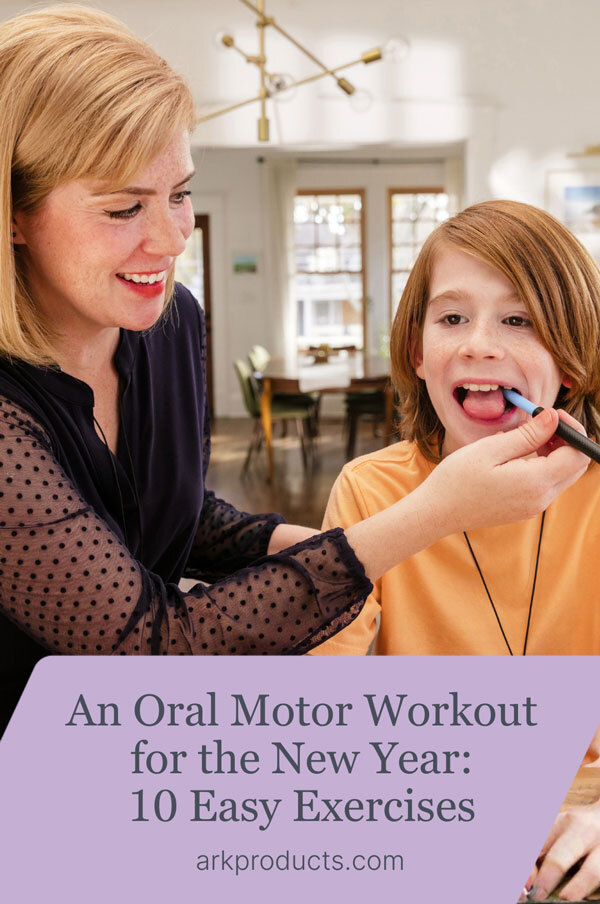
Oral motor strength and coordination is essential for supporting safe mealtimes, nutritional intake, and independence in feeding.
Here are some fun exercises that can help build the oral motor skills needed for chewing, drinking, swallowing, and overall feeding success — all with the help of the Z-Vibe®! ARK provides a variety of tips to be used with the Z-Vibe that perfectly support exercises for the whole mouth and are safe for a wide range of ages. The exercises below list the skill being addressed and why it’s important, along with how to make it fun! Let’s get started!
⭐ Tips for Kids (and Grown-Ups!)
- ✨ Keep sessions short: 2–5 minutes is plenty for oral motor work and not all the exercises need to be completed in one sitting.
- ✨ Make it playful: Games, levels, timers, and silly challenges help kids stay engaged.
- ✨ Offer choices: Let kids choose the tip, use of vibration, or order of exercises. It boosts motivation.
- ✨ Celebrate every win: Stronger chewing, better tongue control, and improved tolerance are all big victories. Start small and build up to increased challenges.
1.  Warm-up & Cool Down
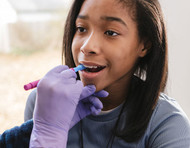
Why it helps: Preparing the mouth before feeding or settling after challenging textures.
How to make it fun: Choose a favorite tip and vibration level (Bite Tube Tip is perfect for this). Kids take three slow breaths while receiving gentle oral input. It’s like a warm-up or cool-down for the mouth.
2.  Animal Kisses
Why it helps: Lip strength which supports straw drinking and the ability to keep food/liquid inside the mouth to avoid food/liquid loss during mealtimes.
How to make it fun: Hold the Animal Tip at the lips. Kids give 5-10 kisses. You can turn vibration on/off like a surprise buzzer or “kiss” back from the animal to build awareness through proprioceptive input.
3.  Smile for the Camera/Say Cheese!
Why it helps: Cheek engagement for steady, efficient chewing and straw drinking.
How to make it fun: Place the Bite-n-Chew Tip over their molars and have kids gently bite down, then smile big to activate cheek muscles. Pretend they’re posing for a picture and say “CHEESE”! Bonus challenge: Try to smile on the left side only… then the right!
4.  Simon Says
Why it helps: Tongue tip control for moving food where it needs to go.
How to make it fun: Model moving your tongue to different spots around the mouth/lips and see if they can copy you. Make it fun with silly faces and sounds. Use the Brush or Probe Tip for additional prompts if they need help finding the right spot. A mirror can also be a great tool to help build awareness.
5.  Tag!
Tag!
Why it helps: Oral sensory awareness for supporting efficient movements and accepting different textures and temperatures.
How to make it fun: Use the Brush or Probe Tip and place it at different places around the inside of the mouth. Kids move their tongue to “tag” the tip. Vibration can be on or off for this one. Bonus challenge: A little piece of food can be placed on the tip. Kids can guess what food they found without looking at it!
6.  Alligator Chomps
Why it helps: Chewing strength, endurance, and the ability to chew on both sides, which is a building block for developing a rotary chew pattern.
How to make it fun: Provide the Bite Tube Tip, Bite-n-Chew Tip, or Brick Tip, and have kids chew 10 times on one side, then switch to the other side.
7.  Lip Tug-of-War
Why it helps: Lip seal for straw drinking, keeping food/drinks in the mouth, and controlling utensils to off load food more efficiently.
How to make it fun: Kids hold the Button Tip with their lips (not teeth) while you gently tug. It becomes a lip-powered tug-of-war, and we want the lips to win!
8.  Elevator Lifts
Why it helps: Lifting food upward toward the palate to get ready for swallowing
How to make it fun: Hold a Spoon or Probe Tip steady on their tongue. Kids can imagine their tongue is the elevator, transporting the tip to the top floor as they press their tongue upward to lift the tip towards their upper teeth/lip.
9.  Trap It!
Why it helps: Lip closure to help with clearing utensils, decreasing drooling, and decreasing food/liquid loss.
How to make it fun: Use a Brush Tip, Probe Tip, or Preefer Tip to quickly tap spots in their mouth. Kids attempt to close their lips around the tip to “trap” it before you are able to pull it out. Encourage them to only use their lips to hold it and not their teeth.
10.  Tongue Slides
Why it helps: Tongue lateralization, moving food from one side of the mouth to the other, and for proper rotary chewing.
How to make it fun: Tap the inside of one cheek with the Probe Tip. Kids reach it with their tongue… then they will slide/lateralize their tongue to move the tip to the other side of their mouth. Try turning on the vibration on one side at a time to help the tongue know where to go.
Remember that these exercises can be altered to fit your child’s needs and age. The most important part is that they are building a positive experience around oral motor tools and exercises. ARK does an amazing job of setting families up for the ability to practice at home using their easy-to-use tools, but don’t be afraid to consult an occupational therapist and/or speech-language pathologist to gain further insight into your child’s needs! Cheers to a new year and new skills!
Stephanie Coe, OTR/L, SWC, PAM, CLEC is a pediatric occupational therapist specializing in sensory processing, autism and developmental disorders, and feeding and swallowing challenges. She is the Executive Director and Co-Founder of aMAYZing Kids in Rancho Santa Margarita and has advanced training in the SOS Approach to Feeding, physical agent modalities, vital stimulation, and sensory integration. She earned her OT degree from Thomas Jefferson University and holds a psychology degree from Drexel University.
Morgan Kollenda, MS, OTR/L is a pediatric occupational therapist with experience in the outpatient setting, focusing on family-centered care. She is currently the Clinical Director of aMAYZing Kids but continues to love working directly with kids of all ages to address feeding and oral motor challenges, sensory processing skills, activities of daily living, and emotional regulation skills. Morgan received her master's degree (MSOT) from California State University, Dominguez Hills and has a bachelor's degree in psychology from the University of California, Santa Barbara.
Sarina Tetley, OTD, OTR/L is a pediatric occupational therapist who has worked in the outpatient pediatric setting, both in the for profit and non-profit sectors. Sarina has worked with children from military families in San Diego County and civilian children across Orange County. Sarina is the Clinical Manager of aMAYZing Kids, a non-profit pediatric clinic. Sarina enjoys working with children and their families, with a child-led and neurodiverse affirming approach, to help them achieve their goals and gain independence through evidence-based therapy and adaptive strategies. Sarina earned both her Doctorate degree (OTD) and her Master’s (MA) degree in Occupational Therapy, and she also holds a BA in Psychology, all from the University of Southern California (USC).
.