
Navigating Sensory Sensitivities at the Dentist
Posted by Hayley Leonard on 6th Feb 2026
Living with a child with autism means that you get used to making compromises or, just downright giving up on things all together - because for most situations, nothing matters as much as their mental health and their sense of safety and autonomy. However, one of the very few things that can’t be compromised on is oral hygiene, which means regular trips to the dentist and twice daily brushing regardless of how challenging it is for everyone.
.
.
From birth, our dentist has always made a big effort to make our children feel welcome. In fact, I was specifically told during pregnancy to bring my baby along to future appointments (teeth or no teeth) just to get them used to being there. So my son has been riding up and down in the chair and getting stickers long before he ever let anyone look in his mouth.
My 5-year-old son has minimal spoken language and generally has huge an aversion to sensory over-stimulation, being touched or having any sort of medical procedure, especially when carried out by strangers, so visits to the dentist easily sit out of his comfort zone on multiple levels. The bright lights, strangers in facemasks, the big chair in the centre of the room where everyone is looking at you and coming towards you strange tools they want to put in your mouth… for a child sensitive to that level of exposure and touch it can really be too much.
But through accommodations made at the dental practice, and an oral sensory routine we developed at home with the Z-Vibe, we have found something that works for us and allows for examination and treatment without causing unnecessary distress.
Working With the Z-Vibe at Home
Our introduction to the Z-Vibe came from a speech and language therapist who suggested it might be a useful tool to help develop his oral motor skills. However, it quickly became a firm favourite in our sensory tool kit, and he loved the vibrating sensation inside of his mouth. It was because of this enjoyment I realised that for the first time ever I was able to get good access to view his teeth, something we had struggled with previously.
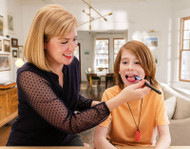
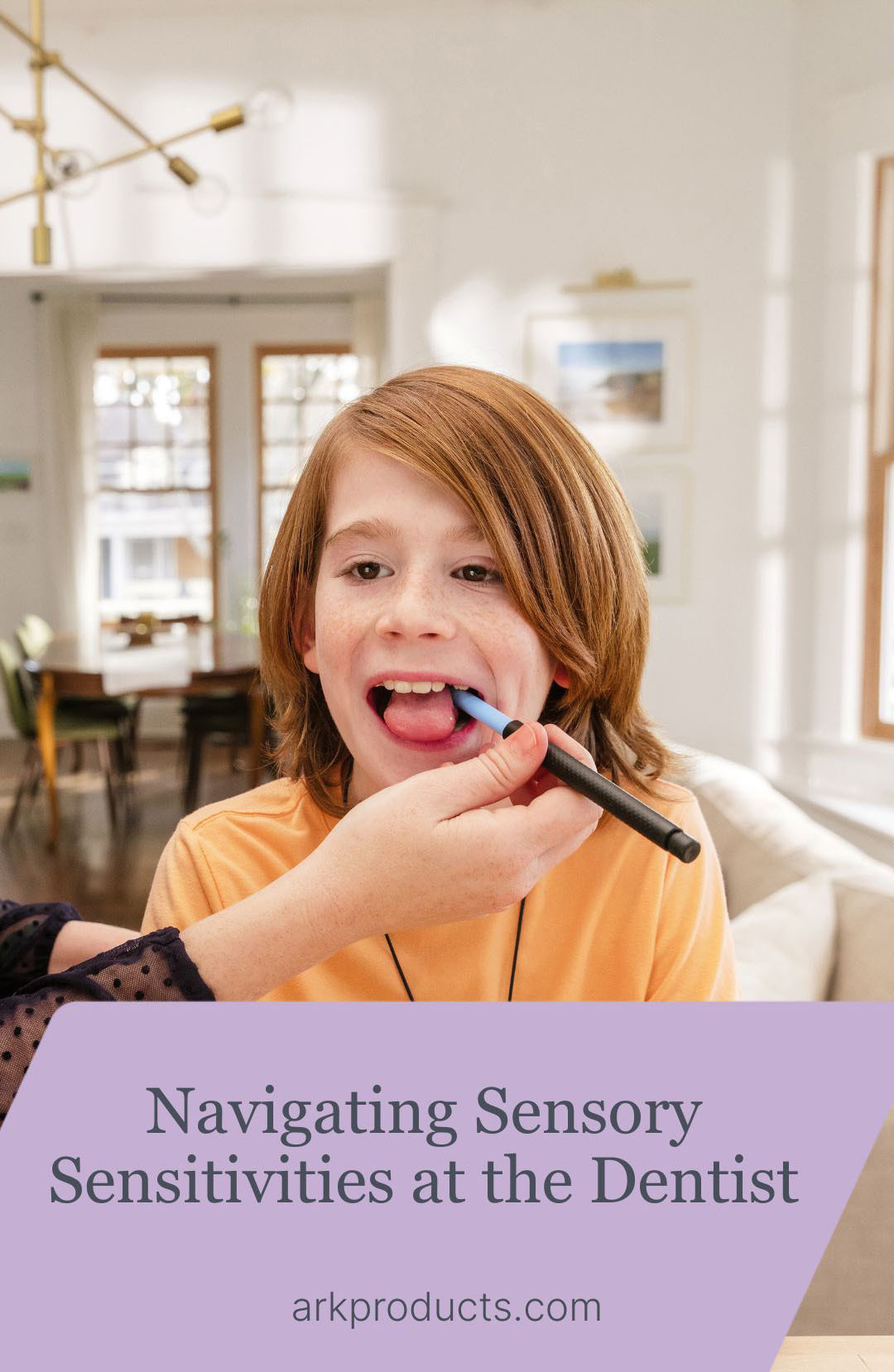
Ever keen to make the most of this, I started using it at home as part of a routine I made up myself just to get him more comfortable with opening his mouth wide and letting me look in his mouth. Using the Fine Tip, we would count each one of his teeth, as slowly as possible left to right, right to left, top and bottom. Using the Tongue Depressor Tip, I could press down on his tongue exposing views to the back of his throat and using the Preefer Tip I was able to pull his cheek back from his teeth and glance at the sides of his teeth. Prior to dental appointments this was invaluable in simply just getting photos taken using my phone camera, so at least if my son refused to co-operate, I had something to show the dentist.
In the run up to dental appointments, we would also hit the YouTube videos hard of his favourite characters getting their teeth examined. We would practice in front of the mirror, and play ‘count the teeth.’ We would also compliment this with picture based AAC to create a list of familiar icons we could take with us on the day to help explain what was happening.
But obviously, I was dubious if it would work on the day. The difference in the environment between home and the dentist was still of a significant difference for a sensory avoidant child, and we had already had a few visits that had ended in refusal. So this time, armed with my iPhone photos and the familiar Z-Vibe, we attempted our next dental appointment slightly optimistic.
Z-Vibe Accommodations at the Dentist
We got off to a great start, because our dentist is extremely laid back and friendly, he made my son feel welcome and allowed me all the time I needed to settle my son in the room. First sitting in the corner, before slowly tempting him in with the excitement of the up and down chair. Slowly but steadily, we were able to encourage him to lay back, surprisingly he played ball to start with, however, the mouth clamped shut soon after.
The dentist of course allowed me to bring the Z-Vibe out, and fortunately the familiarity of something he does at home with enjoyment and full comfort relaxed him and helped him understand what was happening. To him, we were just practicing his familiar routine - we were just counting his teeth. I used the tool to play those same games we did at home, slowly visiting different parts of his mouth whilst the dentist looked in and made his observations.
At our last appointment our dentist decided he wanted to put a small bit of filling material into a chipped molar, and if you’d have told me my son would be able to sit in a chair and have a filling without total sedation, I would never have believed you. However, I used the Z-Vibe to create a familiar sensation for him to focus on, distracting him from what was happening in his mouth and practicing what he knew, whist the dentist snuck in the filling material. Towards the end, he had had enough, but fortunately when turned sideways the Tongue Depressor Tip could keep his mouth open long enough and wide enough for the dentist to quickly finish and slip out, whilst the vibrations kept him completely distracted from what was happening.
It's not just the Z-Vibe that has been an important tool for oral hygiene, but also the oral chews. My son, like many autistic children, exhibits sensory seeking behaviour that means he will put a lot of things in his mouth that aren’t safe for his health and his teeth (hence the chipped molar). The ARK chewy Brick Bracelet is a really great way for him to have his oral sensory needs met without having to worry about damage to his teeth, or him choking on bits of broken plastic that we have seen with cheaper chewy aids.
We all agree that dental success for children is just as much about what happens at home as it is what happens in the chair, but regular brushing is just the start of it. In children with whom sensory accommodations are needed, involving the child’s safe adult in practicing and getting comfortable with this routine at home so that they can support dental staff in the practice is a great way to both improve the dental experience for the child, and also increase the opportunities for the dental practitioner to provide care that will prevent the need for more invasive treatment in future. For us, using the Z-Vibe to bridge the gap between home and the dental chair created a vital sense of familiarity and understanding in a child who struggles in clinically uncertain environments.
About Hayley Leonard:
Hayley is a parent of a five-year-old boy who is minimally speaking and has significant sensory needs. She advocates for families with members who have alternate communication needs to adopt a family-wide approach to multimodal communication and to embed sensory-friendly accommodations in day to day life.
.
.
.