

Oral Motor Skills & Dental Health in Children: They’re More Connected Than You Think
Posted by Emily Riela, MS, CCC-SLP on 6th Feb 2026
As a speech-language pathologist, and the daughter of a dental hygienist, I grew up surrounded by conversations about teeth and oral health. Add in my own childhood experience with protruding teeth and a Class II malocclusion, known as a deep overbite, it’s no surprise that I view oral development through a blended lens as a therapist.
While dentistry and speech-language pathology are distinct fields, they overlap in powerful ways. Understanding this connection helps parents, therapists, and educators support speech development more effectively, especially during the critical early years of child development.
.
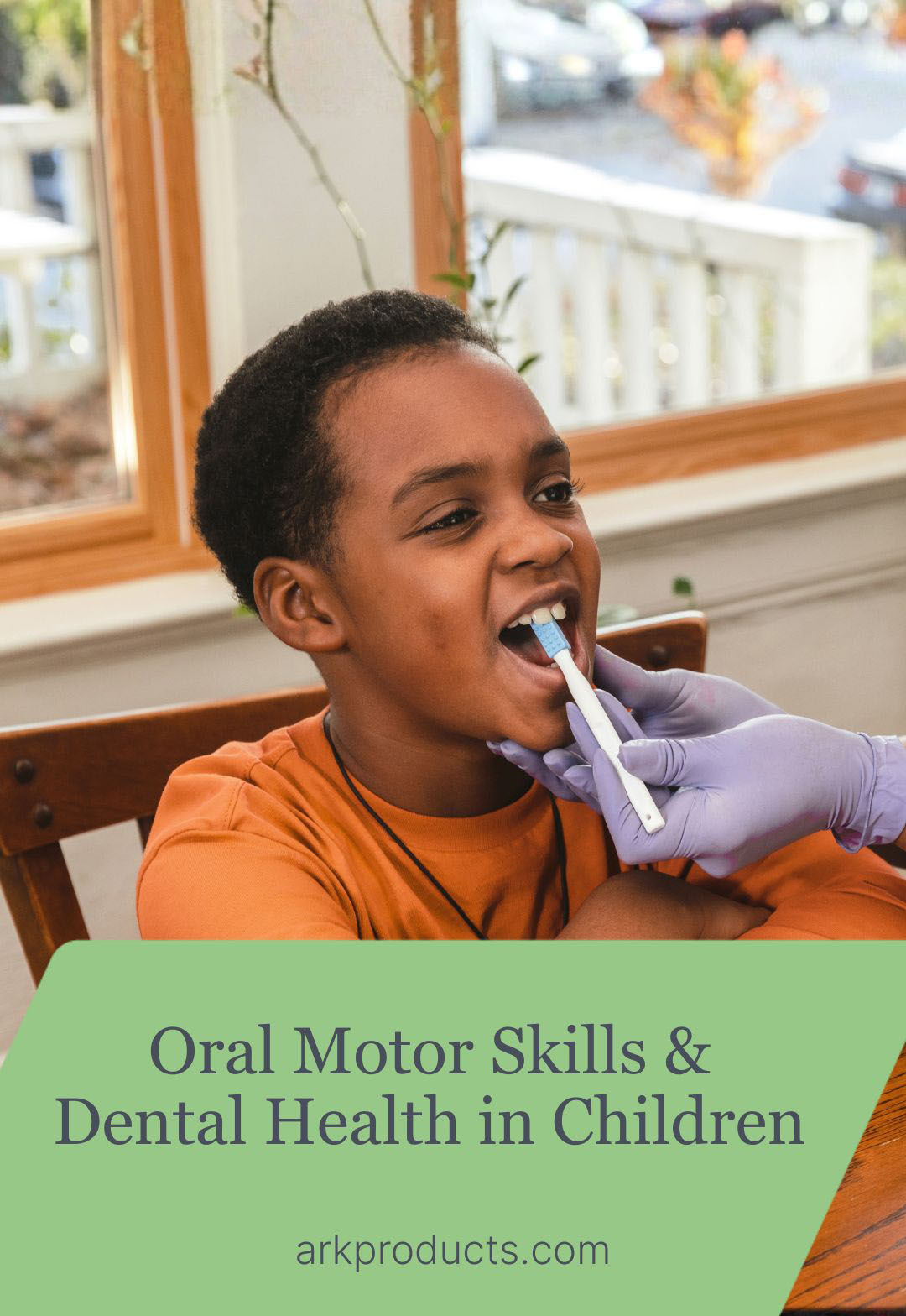
.
Oral motor skills involve the strength, coordination, range of motion, and awareness of the lips, tongue, cheeks, jaw, and soft palate. These skills support important everyday functions such as feeding, swallowing, speech sound production, proper resting posture of the tongue and lips, and breath support. When these skills develop as expected, the mouth works as a beautifully coordinated dance. When they do not, we often see effects that go beyond speech alone.
Dental health is often thought of in terms of cavities, brushing, and orthodontics. But dental professionals also pay close attention to areas such as bite alignment, jaw growth, spacing/crowding between teeth, oral habits (i.e., thumb sucking), and tongue position at rest. These factors directly influence how the oral musculature functions.
So where do oral motor skills and dental health intersect? One of the most important places to start is with the resting posture of the tongue. What many parents and caregivers may not realize is that, at rest, the tongue ideally rests lightly against the roof of the mouth, with the lips closed and the teeth gently apart.
When the tongue rests in an incorrect position, such as low in the mouth or thrusted forward, it can influence the shape of the palate, leading to a higher and narrower roof of the mouth. Over time, this can also affect dental spacing and crowding. In addition to bite patterns, including open bites and overbites.
From a speech perspective, low tongue posture is often associated with articulation difficulties, reduced tongue strength, and inefficient swallowing patterns. They may affect speech sound production, making certain sounds like /s/, /z/, /t/, /d/, and /n/ more difficult to pronounce clearly. At the same time, repeated pressure from the tongue against the teeth during swallowing can influence how the teeth align over time. Even after orthodontic treatment, these patterns can affect how well the dental corrections hold, potentially contributing to teeth shifting if the underlying oral motor habits are not addressed. By identifying and supporting these patterns early with a speech-language pathologist who specializes in myofunctional therapy, parents and caregivers can help children develop healthy oral habits that benefit both speech and dental outcomes.
Although speech-language pathologists do not diagnose malocclusion or prescribe orthodontic treatment, we do assess and treat oral function. When we notice signs such as open mouth posture, limited tongue mobility, or difficulty with chewing it is appropriate to encourage families to consult their family dentist.
Oral habits often play a key role in reinforcing these patterns. Chronic mouth breathing, prolonged thumb sucking or pacifier use, can encourage a low or forward tongue posture and alter typical muscle use. Over time, these habits may contribute to changes in both oral function and dental development, such as protruding front teeth, over bites, narrow palates, and reduced lip and tongue strength.
As speech-language pathologists, it is important to focus on the function behind these habits. This includes oral-sensory needs, self regulation, and muscle tone within therapeutic sessions. Dental professionals monitor how these same habits affect tooth alignment and jaw growth. When both professions work together, intervention becomes more effective, proactive, and supportive for the child.
Addressing these patterns early through functional oral motor activities and increased awareness can support clearer speech while also promoting healthy oral development. Early support helps build strong habits that benefit both communication and long term dental health.
Parents and caregivers are often the first to notice these patterns in their children. Simple everyday observations can provide important clues. For example, a child who pushes their tongue between their teeth when swallowing or speaking may have a tongue thrust pattern. Other signs to watch for include frequent mouth breathing, difficulty with certain speech sounds, or messy eating habits. You might also notice chewing on one side of the mouth or keeping the mouth open at rest.
Addressing orofacial myofunctional patterns early with fun, functional oral motor activities can strengthen the lips, tongue, and jaw while supporting clear speech. At the same time, these exercises help guide proper tongue posture and swallowing patterns, supporting healthy dental development. When speech therapists and dental professionals work together, children benefit from a coordinated approach that supports both communication and long-term oral health.
Functional oral motor activities, such as those supported by ARK Therapeutic tools, help children increase oral awareness; strengthen the lips, tongue, and jaw; develop mature chewing patterns; and explore sensory input in a safe and purposeful way. For children who seek oral sensory input, tools like the ARK Krypto-Bite Necklace provide a safe, wearable, discreet, and “cool” solution for meeting chewing needs. The ARK Oral Motor Probe can be used to increase tactile input, awareness, and oral sensation to aid motor planning and functional use of oral structures. Additionally, the ARK proButton, which targets lip closure and strength, aims to target improved feeding and drinking skills, and saliva control needed for accurate speech sound production. When used thoughtfully as part of a whole-child therapeutic approach, these tools support the oral function that underlies both effective communication and long-term oral health.
Growing up around dentistry and working professionally in speech-language pathology has shown me one clear truth: muscles, teeth, habits, and function are all part of the same system. By recognizing how oral motor skills and dental health go hand-in-hand, we empower children with stronger foundations, not just for speech, but for lifelong oral health. When we support function early, structure often follows.
Because a healthy smile isn’t just about straight teeth.
.
About Emily Riela, MS, CCC-SLP:
I am a speech-language pathologist with a love for helping children grow their communication skills and confidence. I earned my Bachelor of Arts degree from the University of Alabama in 2018 and my Master of Science in Speech-Language Pathology from Yeshiva University in 2021.
I began my career in South Florida, working with individuals with Parkinson’s disease, voice disorders, and swallowing difficulties, which gave me a strong foundation in understanding how the mouth and muscles work together. Today, I focus on early intervention and early childhood development, supporting young children and their families as they build strong foundations for speech, feeding, and overall oral function.
I enjoy spending my free time with my family and practicing pilates!

.
.